
Last updated November 21, 2026
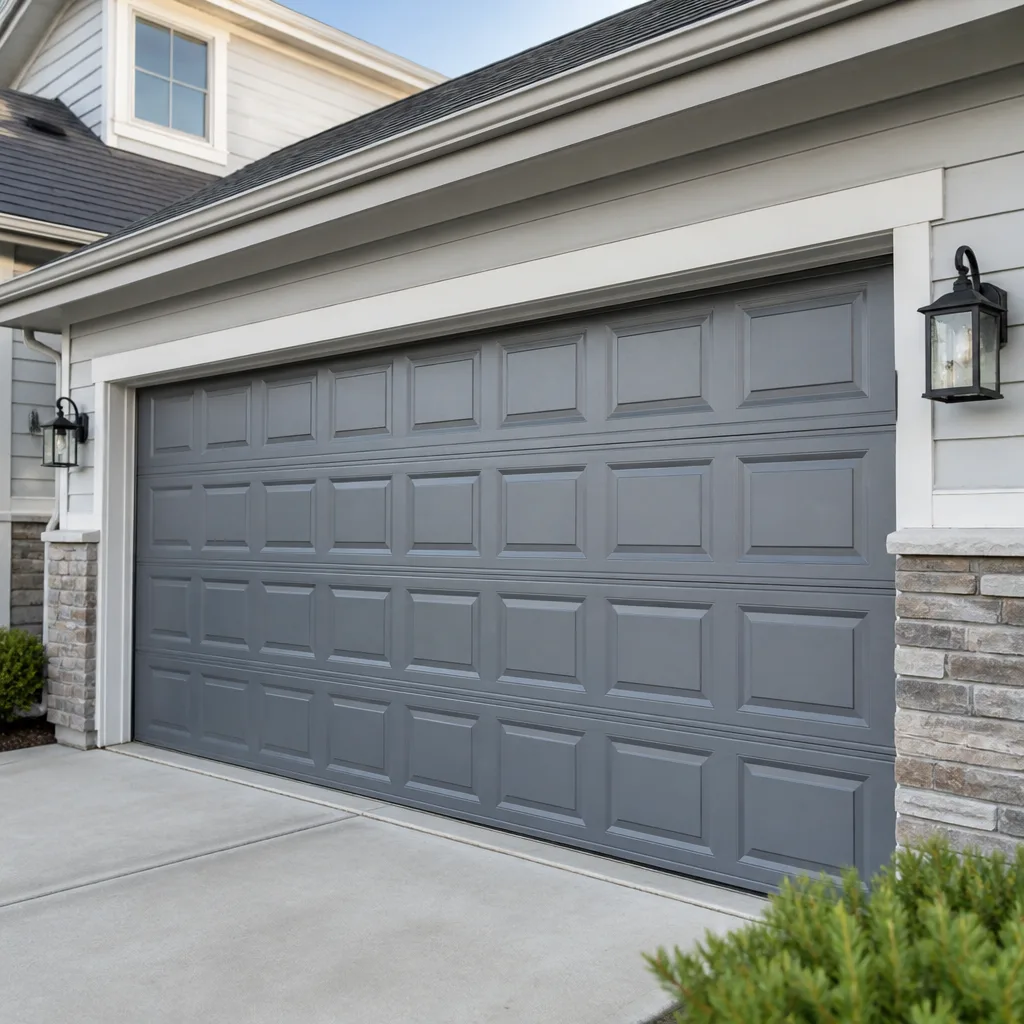 Raised-panel steel
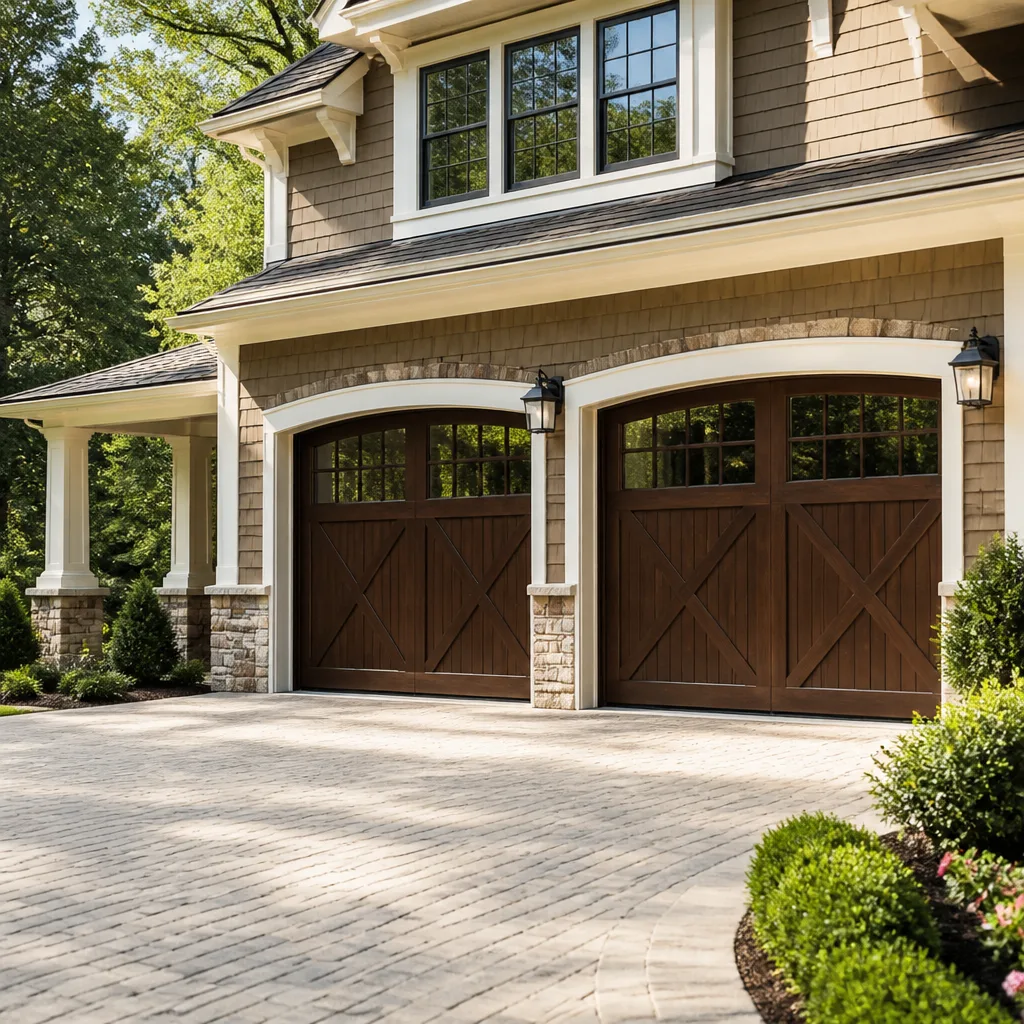 Carriage house
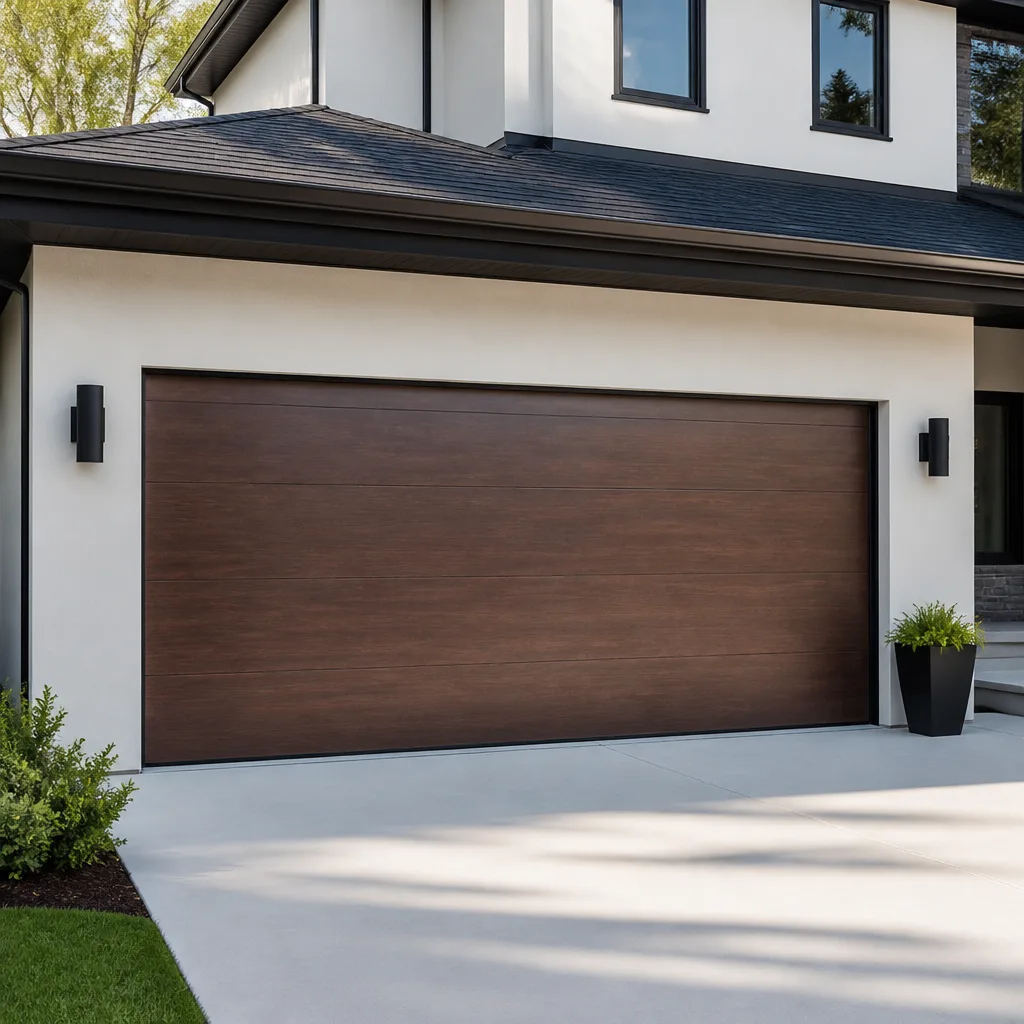 Modern flush
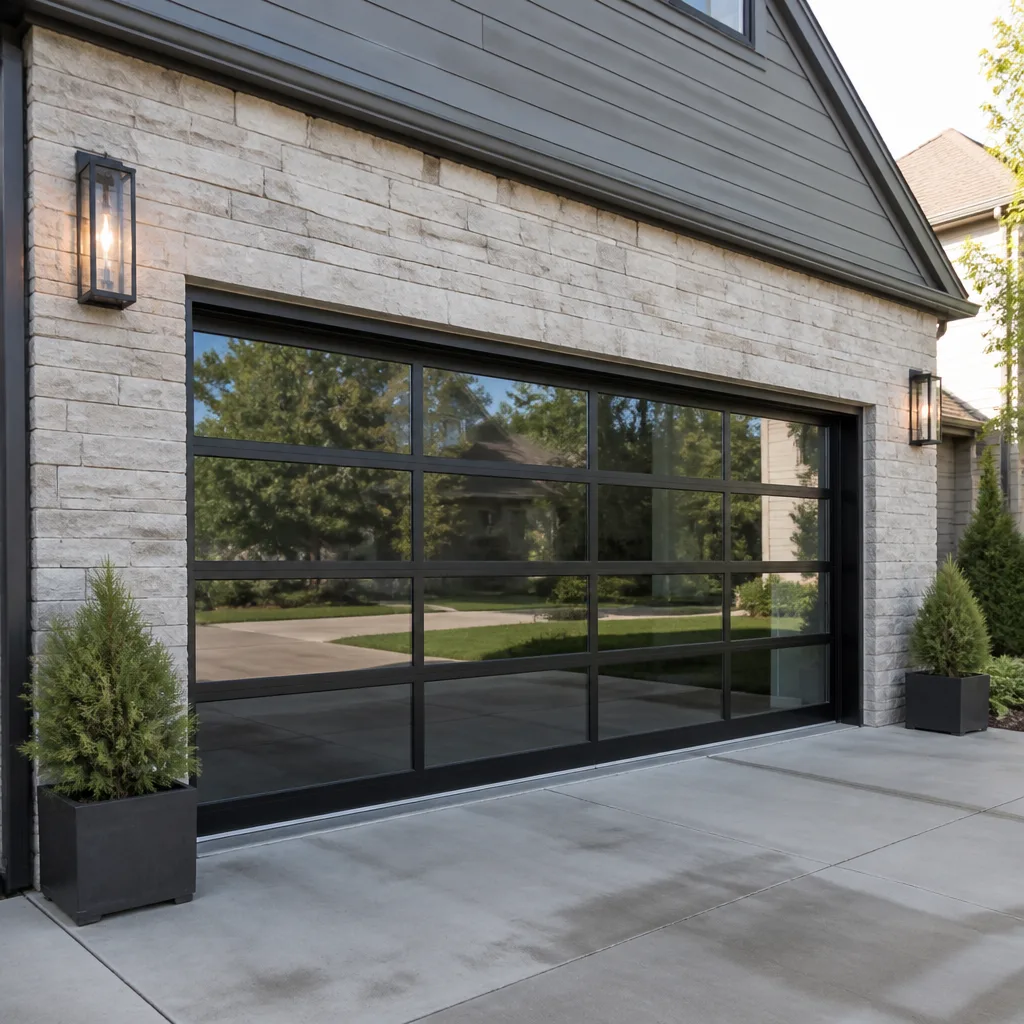 Full-view glass
 LiftMaster openers
 Chamberlain openers
Full 25-point door and opener safety check with every visit - springs, cables, rollers, tracks, and your LiftMaster or Chamberlain opener included
You get a price before we start. It does not change when the pro arrives.
Get your free estimateGarage Door Permits, Codes & Inspections in Bloomington, MN: What You Need to Know
Most homeowners in Bloomington replace a garage door without ever asking whether the job needs a permit. The contractor swaps the door, the truck pulls away, and nobody mentions the building department. That silence feels like a favor. It usually isn’t. An unpermitted door can sit quietly for years and then surface at the worst possible moment – during a home sale, an insurance claim, or a dispute after an injury. The rules here aren’t complicated once you see them clearly, but the line between “repair” and “replacement” matters more than most people realize. This guide walks through when Bloomington requires a permit, what an inspection actually checks, and how the process works from start to finish. You’ll finish knowing exactly which questions to ask before anyone touches your door.
Quick Answer
In Bloomington, MN, a full garage door replacement generally requires a building permit, while routine repairs – new springs, cables, rollers, or an opener swap – typically do not. Because permit thresholds can shift with scope and interpretation, the reliable move is to confirm with the City of Bloomington’s building department before work begins. Any contractor who discourages you from asking that question is telling you something about how they operate.
Styles & brands we work with
- Raised-panel steel
- Carriage house
- Modern flush
- Full-view glass
- LiftMaster openers
- Chamberlain openers
Table of Contents
- Does a garage door replacement need a permit in Bloomington?
- How Minnesota code applies to attached garage doors
- What a garage door inspection actually checks
- The real cost of unpermitted garage work
- How to pull a permit through the City of Bloomington
- Why Bloomington’s climate makes this matter more
- Repair versus replacement: which side of the line are you on?
- Common mistakes to avoid
- Frequently asked questions
Does a garage door replacement need a permit in Bloomington?
Replacing the entire door assembly is treated as an alteration to the building envelope, and Bloomington, like most Minnesota cities, ties permit requirements to that kind of structural and thermal change. A straight swap of like-for-like components – a torsion spring, a set of rollers, a bent bottom section – is repair work. Repair work doesn’t move the needle on the building’s envelope, so it generally doesn’t trigger a permit.
The confusion starts when a job lands in the middle. Say a door has three damaged sections and you’re replacing them with new panels while keeping the original tracks and hardware. Is that repair or replacement? The honest answer is that it depends on scope, and the only authority that settles it is the city’s building department. We tell homeowners in Bloomington to make one phone call and get the answer in writing rather than guess.
Here’s the rough dividing line as it usually plays out:
- Typically no permit: spring replacement, cable replacement, roller and hinge swaps, opener replacement, track realignment, panel replacement on a small scale, weather seal replacement.
- Typically requires a permit: full door replacement, changing the door size or opening, replacing the header or structural framing, converting a manual door to an opener-driven one with new electrical work, or any job that changes how the opening is framed.
The practical takeaway for anyone searching “garage door permit Bloomington MN” is this: if the job is a like-for-like mechanical repair, you’re almost certainly fine. If the job involves a new door going into the opening, ask the city before you sign anything. That one question protects you far more than any contractor’s verbal assurance.
How Minnesota code applies to attached garage doors
An attached garage is not a separate building. It shares a wall with your house, and that shared wall is where the code gets serious. Minnesota adopts the State Building Code, which incorporates residential provisions modeled on the International Residential Code, and those provisions treat the garage-to-house separation as a life-safety feature. Section R302 of that framework is the one most often cited: it governs separation between the garage and the dwelling, including the door and wall assembly between them.
What does that mean for your door in practice? Three things.
- The wall between garage and house must resist fire spread. The door leading from the garage into the living space, and the gypsum board on that wall, are part of the required separation. A garage door replacement that disturbs that wall needs to restore it correctly.
- Energy code applies to the door itself. Minnesota’s energy code sets performance expectations for the building envelope, and an attached garage door is part of that envelope. A door with no insulation in an attached, conditioned-adjacent garage is a weaker assembly than code expects. This is why insulated doors are standard for attached garages in Bloomington and why inspectors look at the door’s rating, not just its fit.
- Opener safety standards are enforced. Modern openers must have photoelectric safety reversal and pressure-sensing reversal. An inspection will test whether the door reverses when the beam is broken and whether it reverses on contact with an obstruction. If it doesn’t, the door fails.
None of this is exotic. It’s the baseline for a door that closes off a heated home from an unheated garage in a climate that hits both extremes. What it does mean is that a cheap uninsulated door slapped into an attached garage in Bloomington may look fine and still fail an inspection on performance grounds. If you’re replacing a door, buy one rated for the application, not just the one on sale.
What a garage door inspection actually checks
If a permit is pulled, an inspection follows. Homeowners often imagine a quick glance and a signature. In reality, an inspector is checking whether the installation is structurally sound, code-compliant, and safe to operate. Here’s what typically gets looked at:
- Header and framing load. The header above the opening carries the weight of the wall and roof above it. An inspector confirms the new door’s weight and the track/spring system are supported by framing that can carry the load – especially important if the door is heavier than the one it replaced, which happens when going from a manual door to an insulated sectional door.
- R-value and envelope compliance. For attached garages, the door’s insulation rating and seal are checked against what the energy code expects for the assembly.
- Track alignment and anchorage. Tracks must be plumb, level, and anchored into framing, not just drywall or a block wall with weak fasteners.
- Spring and cable condition. The torsion or extension springs must be correctly sized for the door weight, and cables must be intact and properly wound. This is the highest-risk part of any door, and inspectors know it.
- Opener safety reversal. Both the photoelectric beam and the pressure-sensing reverse are tested. The door must reverse on obstruction.
- Emergency release. The manual release must be functional and reachable.
- Weather seal and headroom clearances. Gaps at the sides and top that let in water, snow, or cold air get flagged, as do clearance problems that stress the opener.
In our experience, most failed inspections come down to three things: undersized springs for the new door weight, an opener that doesn’t reverse properly on test, and a header that wasn’t checked before a heavier door went in. All three are avoidable when the installer measures and sizes the job properly instead of reusing old hardware out of habit.
The real cost of unpermitted garage work
Skipping the permit rarely causes trouble the day the door goes up. The door works. The garage is quiet. The problem surfaces later, and it usually surfaces in one of three ways.
The home sale. Minnesota sellers complete a property disclosure, and buyers routinely pull permit history during due diligence. An unpermitted garage door replacement can show up as a discrepancy – a new door with no corresponding permit record. Depending on how the buyer and their agent handle it, you may be asked to retroactively permit the work, provide documentation, or negotiate on price. Retroactive permitting is possible but involves inspection of work already covered up, which is never as clean as doing it right the first time.
The insurance claim. Homeowner’s policies generally require that work on the home be done to code and with required permits. If a door failure leads to a claim – water intrusion through a badly sealed door that damages interior finishes, for example – an adjuster may ask whether the installation was permitted. An unpermitted installation gives an insurer a reason to question coverage. That’s not a guarantee of denial, but it’s a position you don’t want to argue from.
Liability after an injury. A garage door is the heaviest moving object in most homes, and springs and cables store enormous energy. If a door fails and someone is hurt – a family member, a visitor, a contractor – the question of whether the work was done to code and inspected becomes central. Unpermitted work made by someone who isn’t accountable is a weak position.
None of these scenarios are dramatic. That’s the point. They’re ordinary, boring consequences that arrive years later and cost more than the permit ever would have.
How to pull a permit through the City of Bloomington
The permit process itself is not the obstacle people imagine. Bloomington’s building department handles residential permits routinely, and the steps are straightforward. Here’s the sequence:
- Confirm the requirement. Call the City of Bloomington building department and describe the exact scope: door size, whether the opening is changing, whether an opener is being added. Ask whether a permit is needed and what the application requires. Get the answer from the department, not from a contractor’s memory.
- Gather the project details. You’ll typically need the property address, the scope of work, the door’s specifications (size, weight, insulation rating), and information about who’s doing the installation. For a replacement in kind at the same opening size, this is usually simple.
- Submit the application. Bloomington accepts residential permit applications through its building department; ask which submission method they prefer for your scope. Smaller residential permits are often handled with a short application and minimal plan review.
- Pay the fee. Permit fees for residential work are set by the city’s fee schedule and scale with project valuation. Ask for the exact fee at the counter or by phone – it’s a small fraction of the door cost.
- Get the permit issued before work starts. This is the step people skip. A permit pulled after the work is done is a retroactive permit, and it invites extra scrutiny.
- Schedule the inspection. Once the door is installed, call for inspection. The inspector reviews the items covered above. If something fails, you get a correction list and a re-inspection.
- Keep the record. Save the permit and the final inspection sign-off with your home documents. It’s the paperwork a future buyer or insurer will want to see.
Timelines vary with the city’s workload, but residential permits for straightforward replacements usually move faster than people fear. The real timeline risk isn’t the permit – it’s ordering a door. Many door models aren’t stocked and need to be built and shipped, so the schedule is driven by the door’s lead time, not the paperwork. That’s why replacement work gets measured, ordered, and scheduled rather than done on the spot.
Two closing notes on the process. First, a permit is not an inspection – you still need the inspection to close it out. Second, if a contractor tells you a permit isn’t needed for a full replacement in Bloomington without ever calling the city, treat that as a warning sign and verify independently. When you’re ready to talk through your specific door, you can reach us at (855) 904-7314.
Why Bloomington’s climate makes this matter more
Bloomington sits in a climate that swings from humid summer heat to hard winter cold, and a garage door is the largest moving surface on the house. That range drives everything about how the door should be specified.
Cold months mean thermal cycling. A door that’s undersized on insulation becomes a cold surface on the inside, and moisture condenses on it and on the hardware. Steel components contract and expand repeatedly, which stresses fasteners and seals. A properly insulated door rated for the assembly reduces that swing and keeps the garage closer to the house temperature. On an attached garage, that’s not comfort – it’s envelope performance, and it’s what the energy code is aimed at.
Snow and ice add another layer. Accumulation at the bottom seal can freeze the door to the slab, and forcing an opener against a frozen door stresses springs, cables, and the opener’s drive gear. That failure mode shows up every winter in Bloomington. Inspectors and installers both look at the bottom seal and the threshold for this reason.
Summer brings the opposite problem: heat expansion and humidity. Wood components swell, steel tracks can shift slightly, and a door that ran smoothly in April may bind in July if the tracks weren’t anchored properly. When we look at a door that’s misbehaving seasonally, track anchorage is one of the first things we check. For routine problems, garage door repair covers the mechanical fixes that don’t require a permit.
Repair versus replacement: which side of the line are you on?
Getting the repair-versus-replace call right saves you both money and hassle. The core question is whether the door’s structure or the opening’s framing is changing. If they aren’t, you’re almost certainly in repair territory. If either is, plan for a permit.
Here’s a practical way to sort it:
- Broken spring, one side. Repair. Springs are wear items. Note that a matched pair is almost always replaced together, since a new spring paired with an older one loads unevenly – a pair costs about twice a single spring.
- Snapped cable. Repair. Cables are replaced as a set with the spring work.
- Door won’t open or close, opener unresponsive. Diagnosis first. Often the door itself is fine and the problem is in the opener. That’s a good moment to look at garage door opener repair. LiftMaster and Chamberlain units in particular have safety-reversal sensors that fail and stop the door, and that’s a repair, not a permit issue.
- One or two bent sections, everything else sound. Usually repair, provided the replacement sections match and the door’s balance is restored.
- Door is failing across the whole assembly. Replacement. Plan for measurement, ordering, and a permit.
- Changing the door size or the opening. Replacement plus framing changes. Permit territory, and the header needs to be evaluated.
There’s one repair category worth calling out separately: springs. High-tension torsion springs and cables store enough energy to cause serious injury, and this is the repair most generalists decline. We handle garage door spring repair with proper winding bars and door restraints, and we won’t walk a homeowner through doing it themselves. Our technicians have up to 10 years of experience, and that experience exists for a reason.
If you’re at a repair-versus-replace decision point and unsure which side you’re on, the estimate is free and the answer is honest. Call (855) 904-7314.
Common Mistakes to Avoid
- Assuming repair permits are required. They usually aren’t, and pulling one for a spring swap wastes your time and money. Confirm with the city when in doubt, but don’t over-apply the rule.
- Assuming replacement permits aren’t. This is the more common and more expensive error. A full door replacement in Bloomington is generally a permitted alteration, and skipping it creates a paperwork gap that follows the house.
- Taking a contractor’s word on permits without verifying. A quick call to the city’s building department settles it. If the answer contradicts what you were told, that’s information worth having before the door is installed, not after.
- Buying an uninsulated door for an attached garage. The energy code expects envelope performance, and an inspection can fail a door that doesn’t meet it. Insulation is a spec, not an upgrade.
- Reusing old springs on a heavier new door. A new insulated door weighs more than the door it replaces, and old springs sized for the old weight will overload. That shows up as premature spring failure and a failed inspection.
- Not scheduling the final inspection. Getting the permit issued and never closing it out leaves the job in limbo. The sign-off is the part that matters when you sell.
- Skipping the emergency release test. It’s easy to overlook, and an inspector checks it. Test it periodically: pull the release with the door closed and confirm the door moves freely by hand.
- Force-operating a frozen door. Cycling an opener against a door frozen to the slab in winter is how springs and drive gears break. Clear the seal before running the door.
See the difference
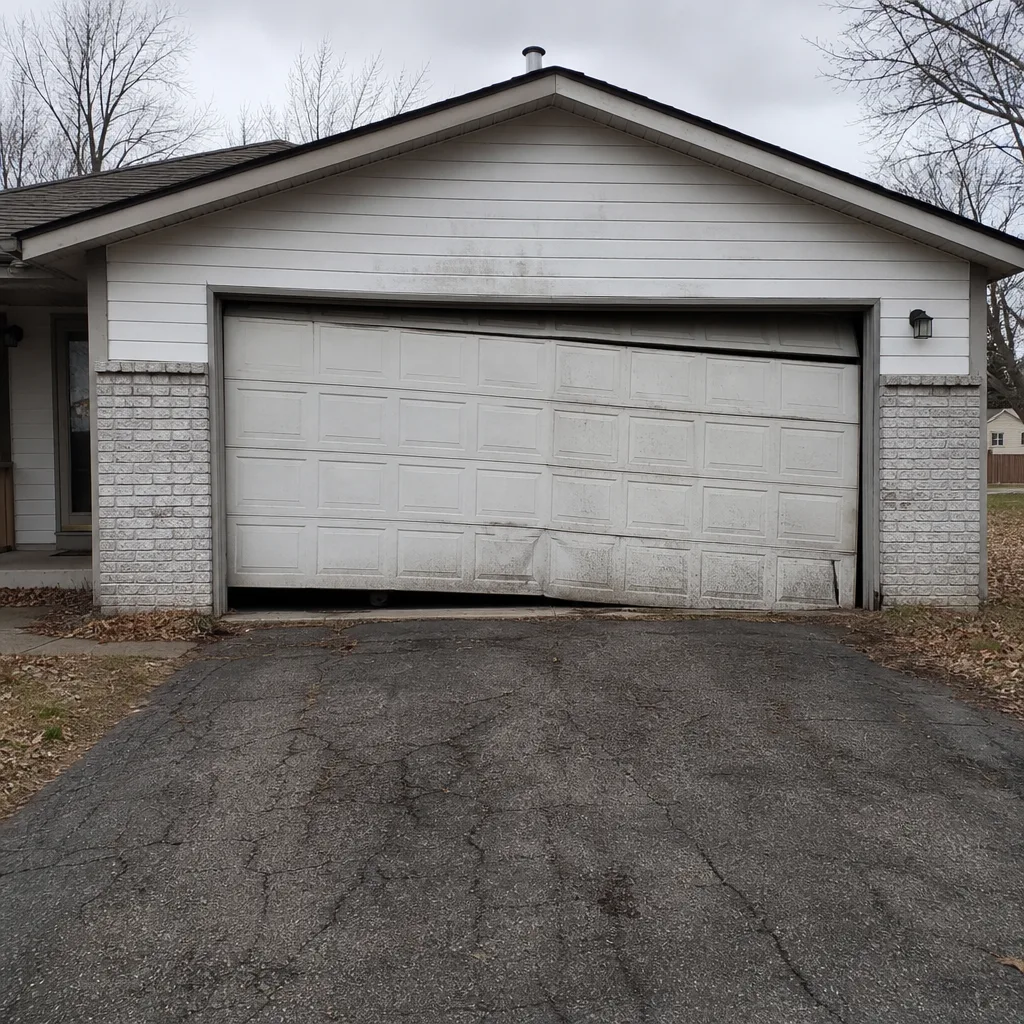 Before
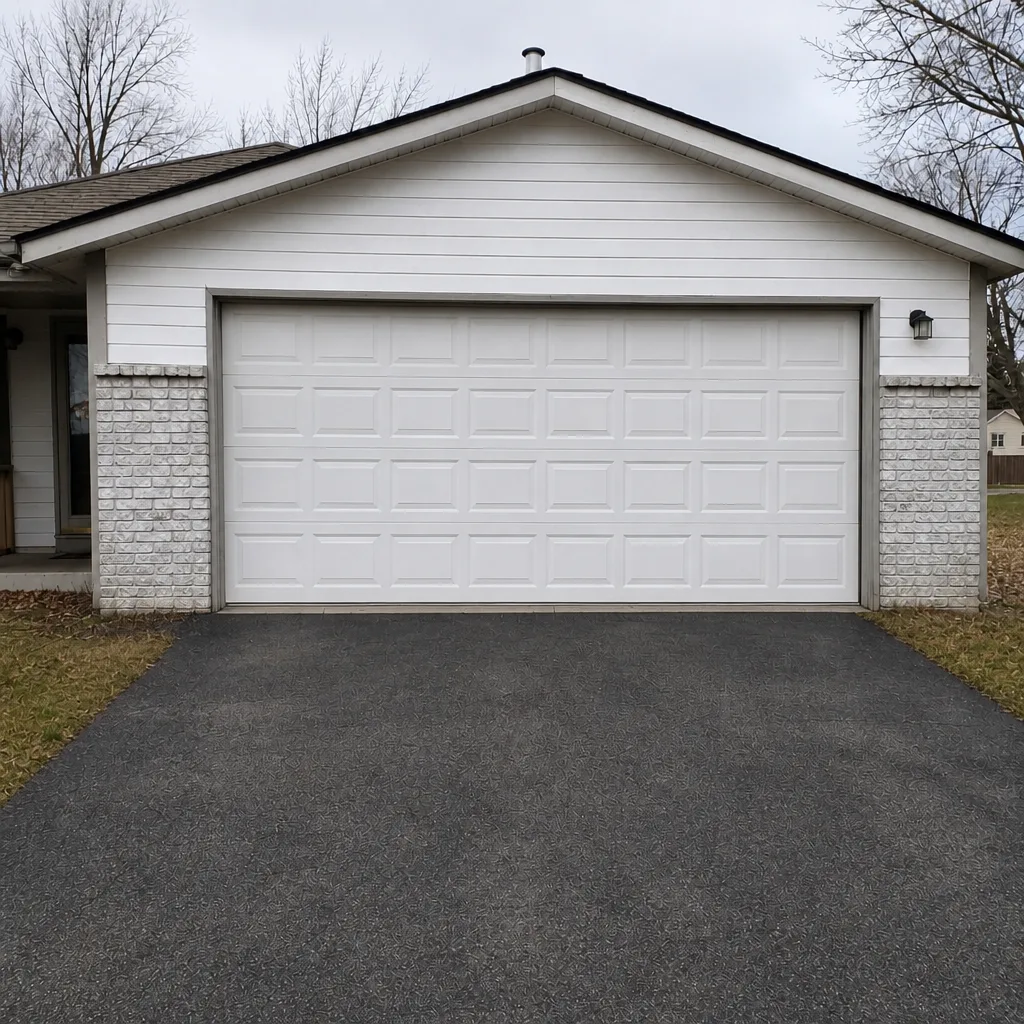 After
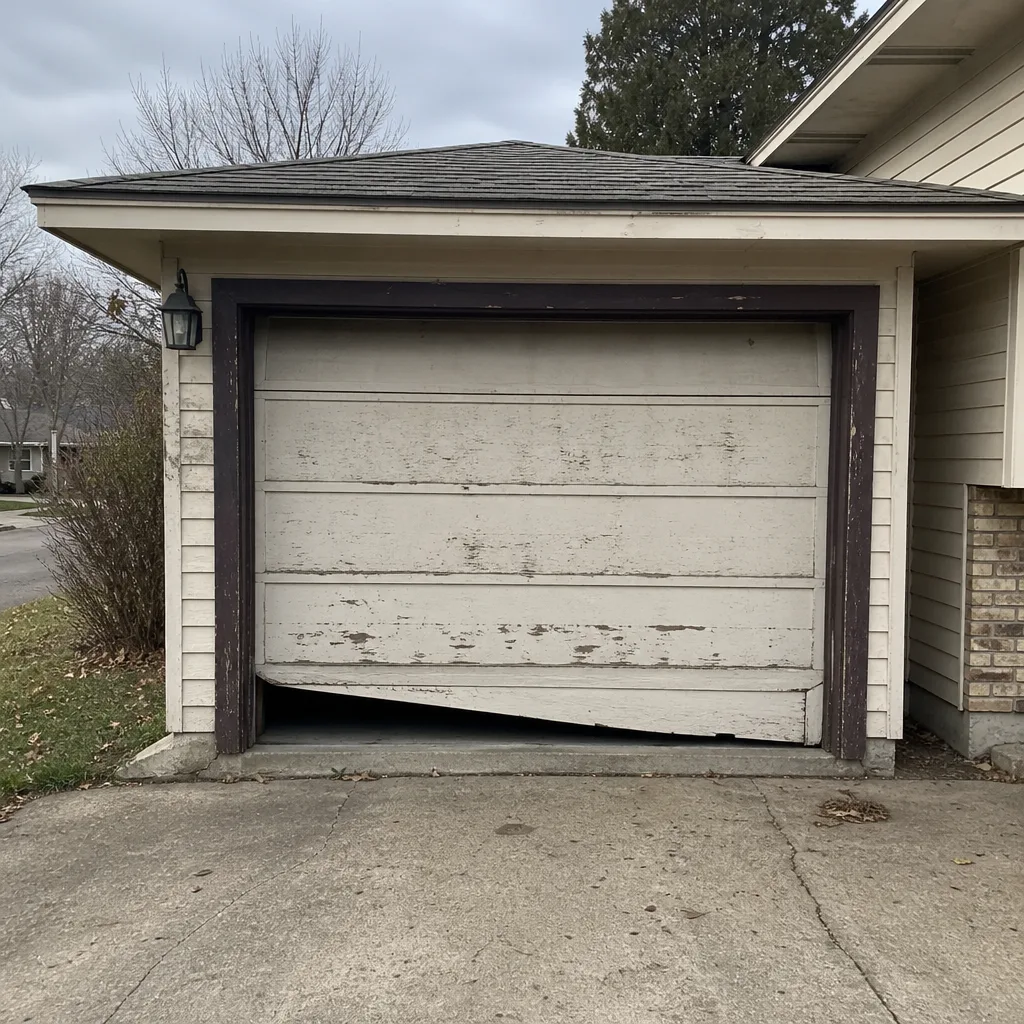 Before
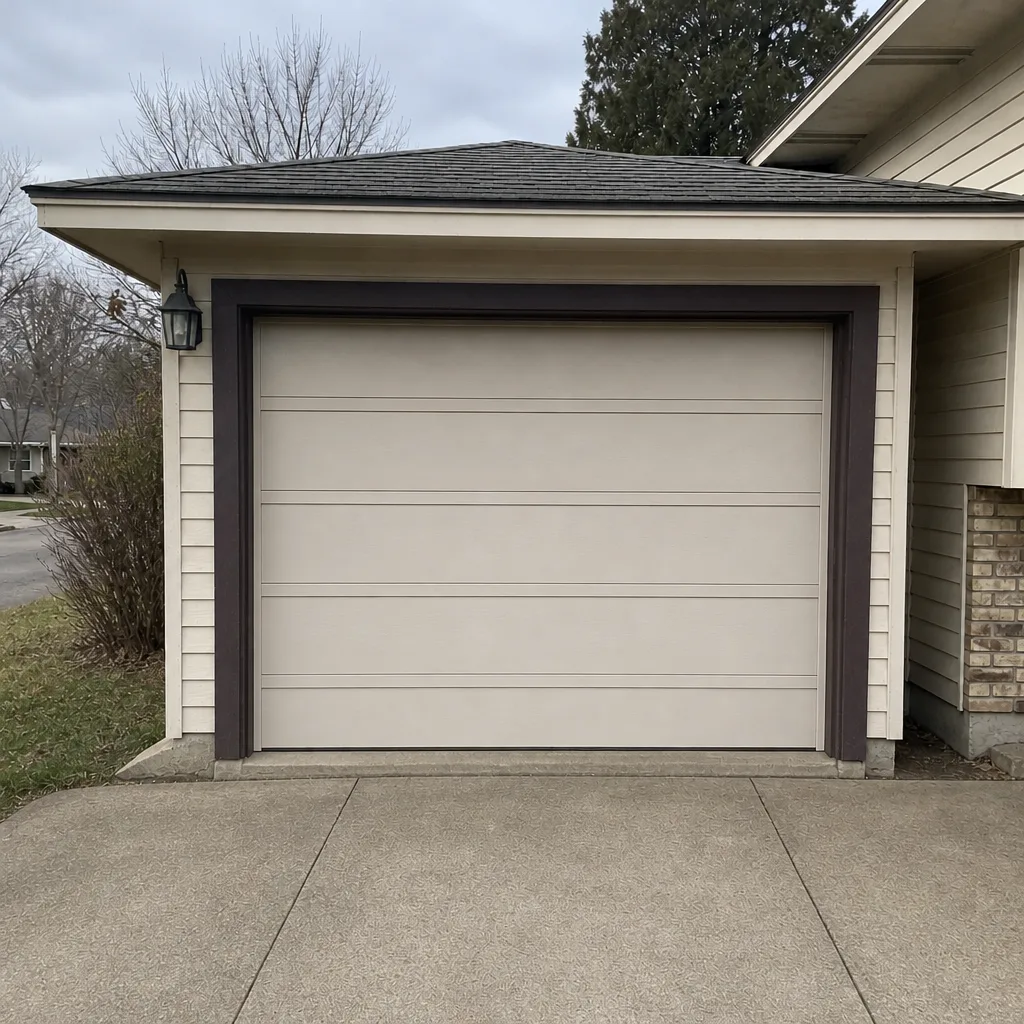 After
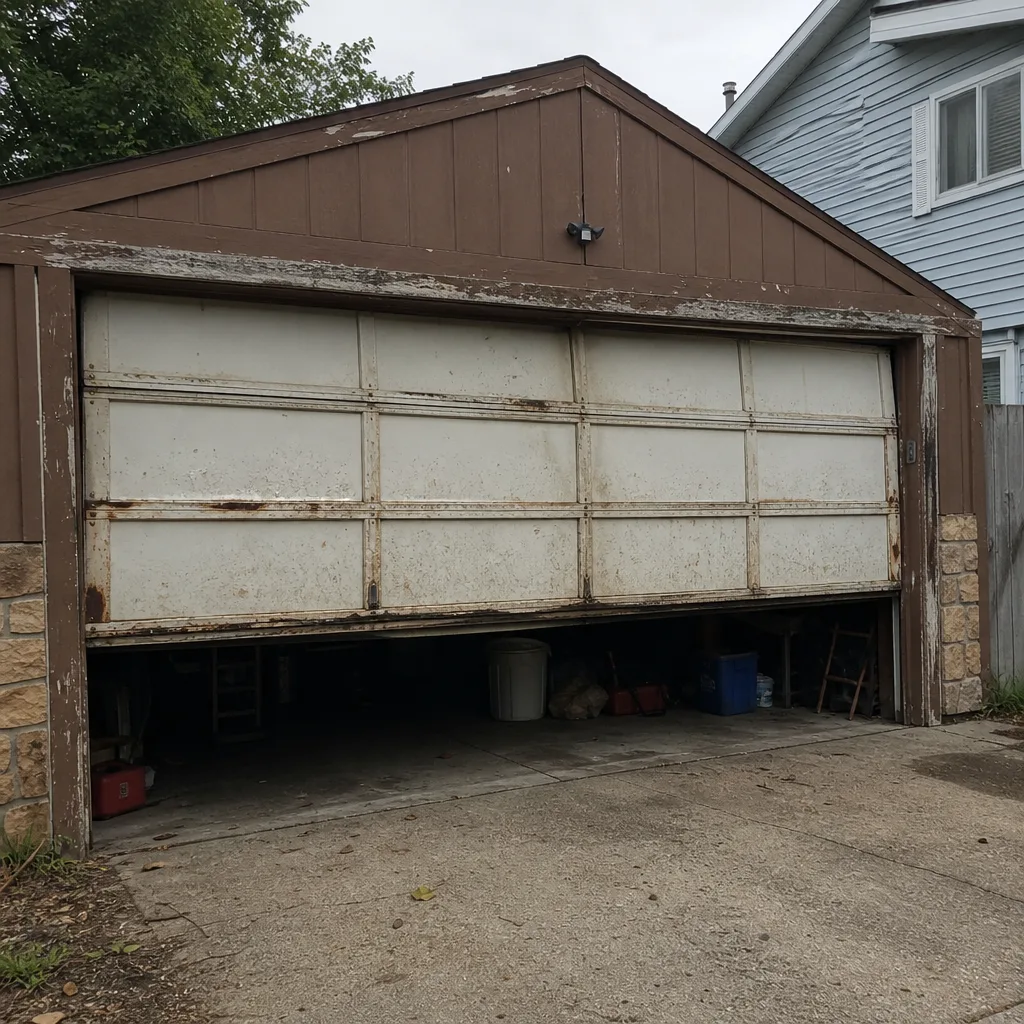 Before
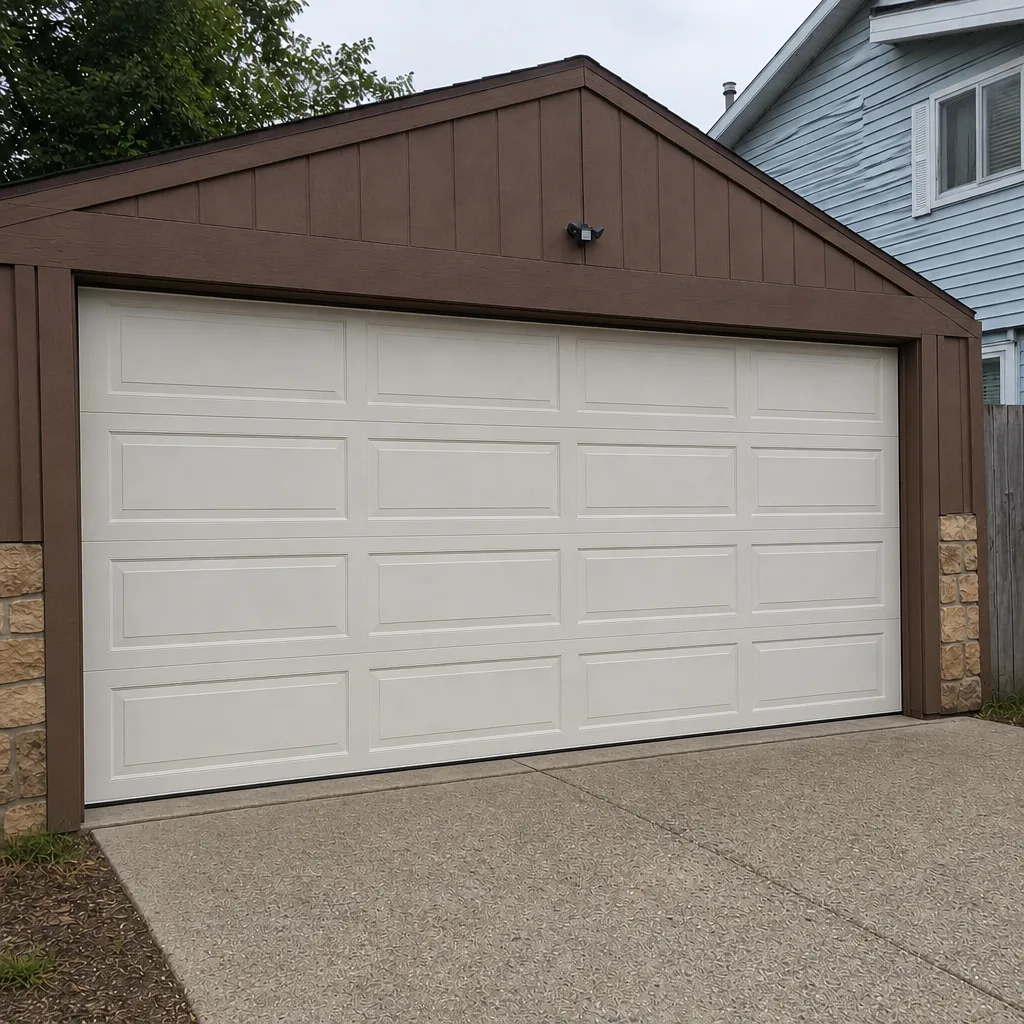 After
When to Call a Professional
Call a professional when the problem involves springs, cables, or anything under tension. Those components can cause serious injury, and they’re not a homeowner repair. Call when the opener runs but the door doesn’t move, when the door reverses on its own, when a section is cracked or bent badly enough to compromise the panel, or when the door is failing across the whole assembly and replacement is on the table. For replacement work, call early – a proper job starts with a measurement and a written price, not a same-day guess. Bloomington Garage Door Repair Pros offers free estimates in Bloomington – call (855) 904-7314. We answer 24/7. Fast dispatch from 7am to 7pm, Sunday through Friday. When you call, the price is quoted and agreed before any work starts, and the written estimate sets the final price.
Frequently Asked Questions
A full garage door replacement in Bloomington generally requires a building permit, while routine repairs usually do not. Because the threshold depends on scope, confirm with the City of Bloomington building department before work begins. Call (855) 904-7314 for a free estimate on the door itself – estimates are free.
No. Spring and cable replacement is mechanical repair and doesn’t change the building envelope, so it typically doesn’t require a permit. It does require trained hands – high-tension springs are the most dangerous part of the door. Call (855) 904-7314 and we’ll get the price agreed before any work starts.
An inspection checks header and framing load, the door’s insulation and envelope compliance, track alignment and anchorage, spring and cable condition, opener safety reversal on both the beam and pressure sensing, the emergency release, and weather seals. Any one of those can fail a job. If your door is due for one, call (855) 904-7314 for a free estimate.
Permit fees for residential work are set by the City of Bloomington’s fee schedule and scale with project valuation, so the exact number comes from the building department, not from us. Ask them directly when you apply. For the door work itself, call (855) 904-7314 – estimates are free.
No. The written estimate is the price, agreed before any work starts. We measure, quote, and then hold to that number. You can compare the estimate against what you’re told elsewhere – call (855) 904-7314 for an exact quote.
The local professionals we connect you with are licensed and insured as their state requires, and they’re experienced with major brands including LiftMaster, Chamberlain, Craftsman, and Raynor. We handle the full range of work – repair, opener repair, spring repair, and installation. Call (855) 904-7314 to talk through your door.
Yes. Buyers pull permit history during due diligence, and a new door with no matching record can surface as a discrepancy that gets negotiated. Retroactive permitting is possible but messier than doing it right. Call (855) 904-7314 if you’re trying to sort out an existing door.
For repair calls, same-day service is often possible. We answer 24/7, with fast dispatch from 7am to 7pm, Sunday through Friday. Replacement work is different – that’s measured, ordered, and scheduled, so the lead time is driven by the door, not the calendar. Call (855) 904-7314 to book.
The Bottom Line
The line between repair and replacement is the whole game in Bloomington. Springs, cables, rollers, openers – repair, no permit, plan around safety. Full door replacement – measured, ordered, and generally permitted through the city. Minnesota code governs the garage-to-house separation, the energy performance of the door, and opener safety reversal, and an inspection checks all three. Skipping the permit saves a small fee now and creates a much larger problem at a home sale, an insurance claim, or a liability dispute later. Verify the requirement with Bloomington’s building department, buy an insulated door for an attached garage, and keep the inspection sign-off. That’s the whole checklist, and it holds up.
For repair, garage door repair, spring work, opener diagnosis, or a full replacement estimate, the first step is a conversation. We work on LiftMaster, Chamberlain, Genie, Clopay, Amarr, Wayne Dalton, Craftsman, and Raynor systems, so no matter what brand is on your door or opener, we can handle it. Ready to get started? Call (855) 904-7314 for a free estimate. We answer 24/7, with fast dispatch from 7am to 7pm, Sunday through Friday. Every price is quoted and agreed before any work starts, and the written estimate sets the final price.
Written by the team at Bloomington Garage Door Repair Pros.