
Last updated November 21, 2026
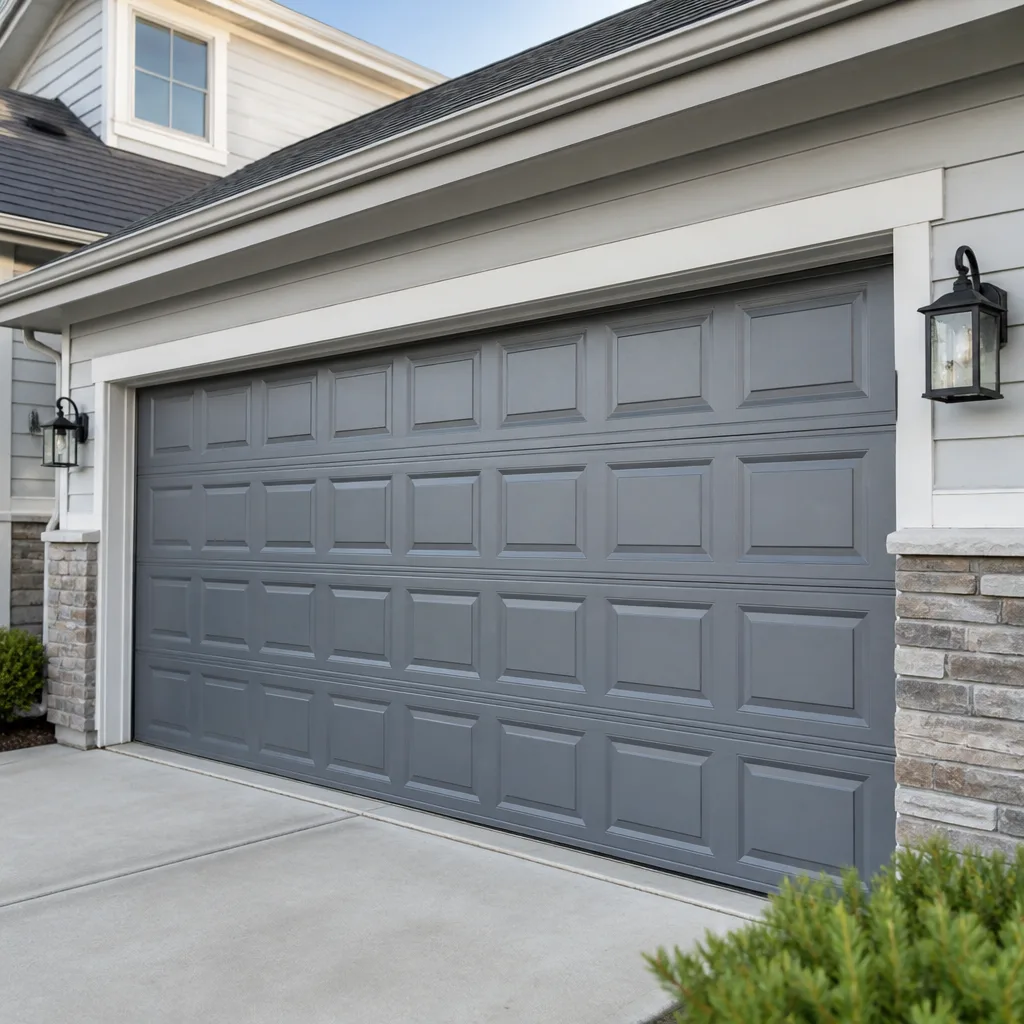 Raised-panel steel
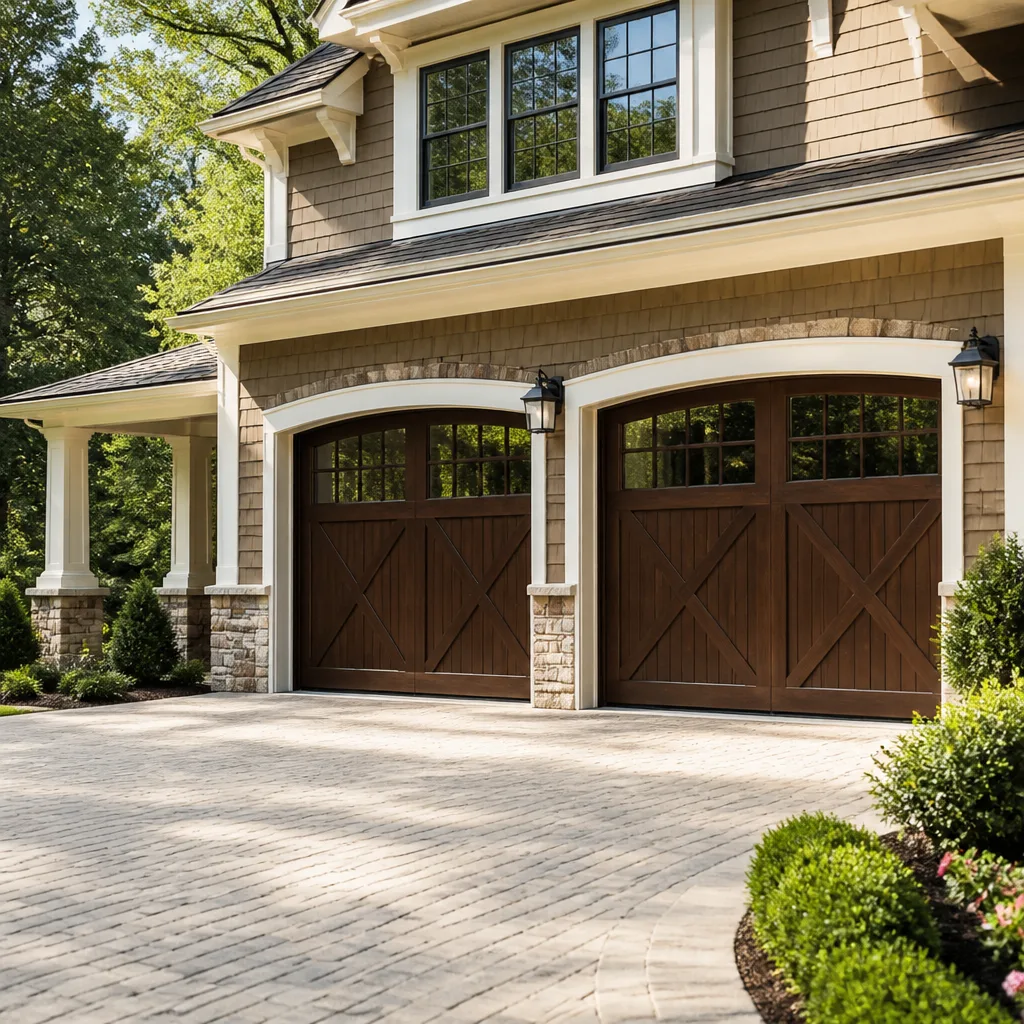 Carriage house
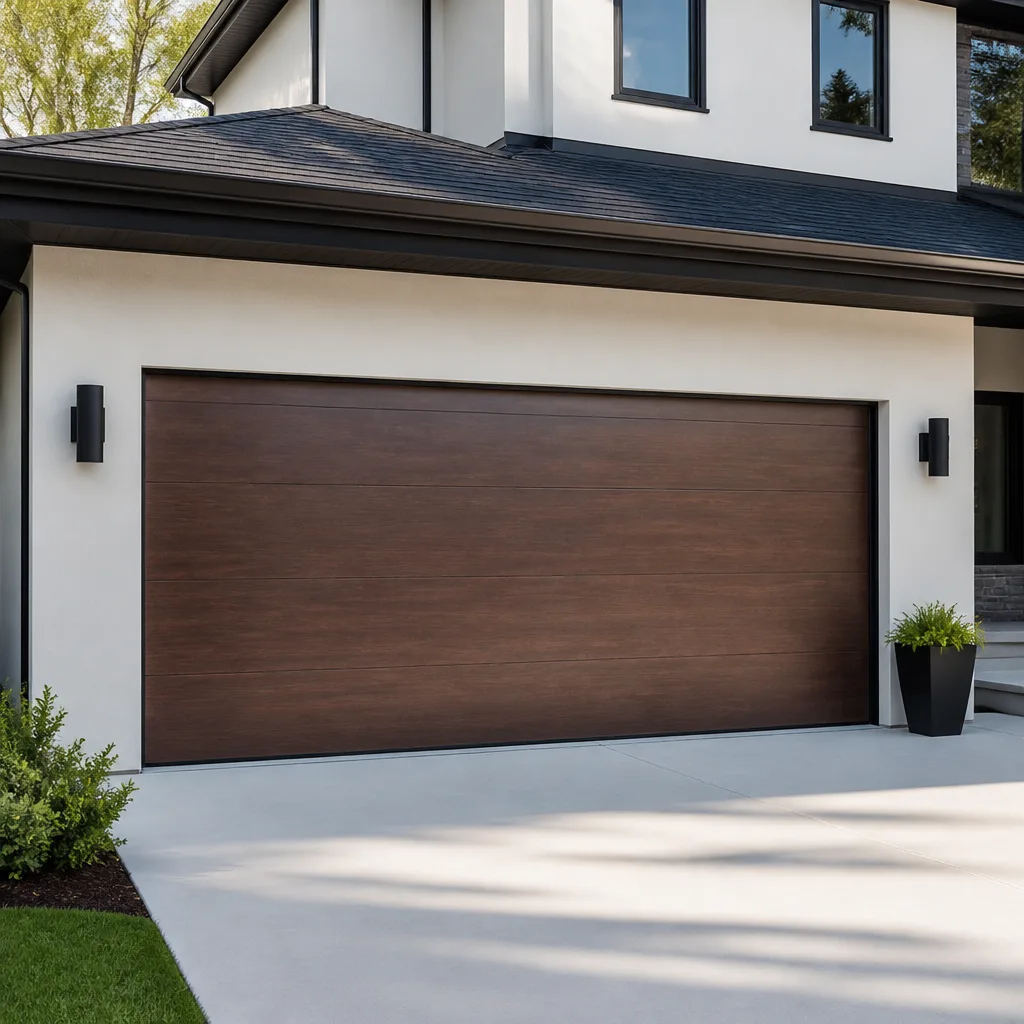 Modern flush
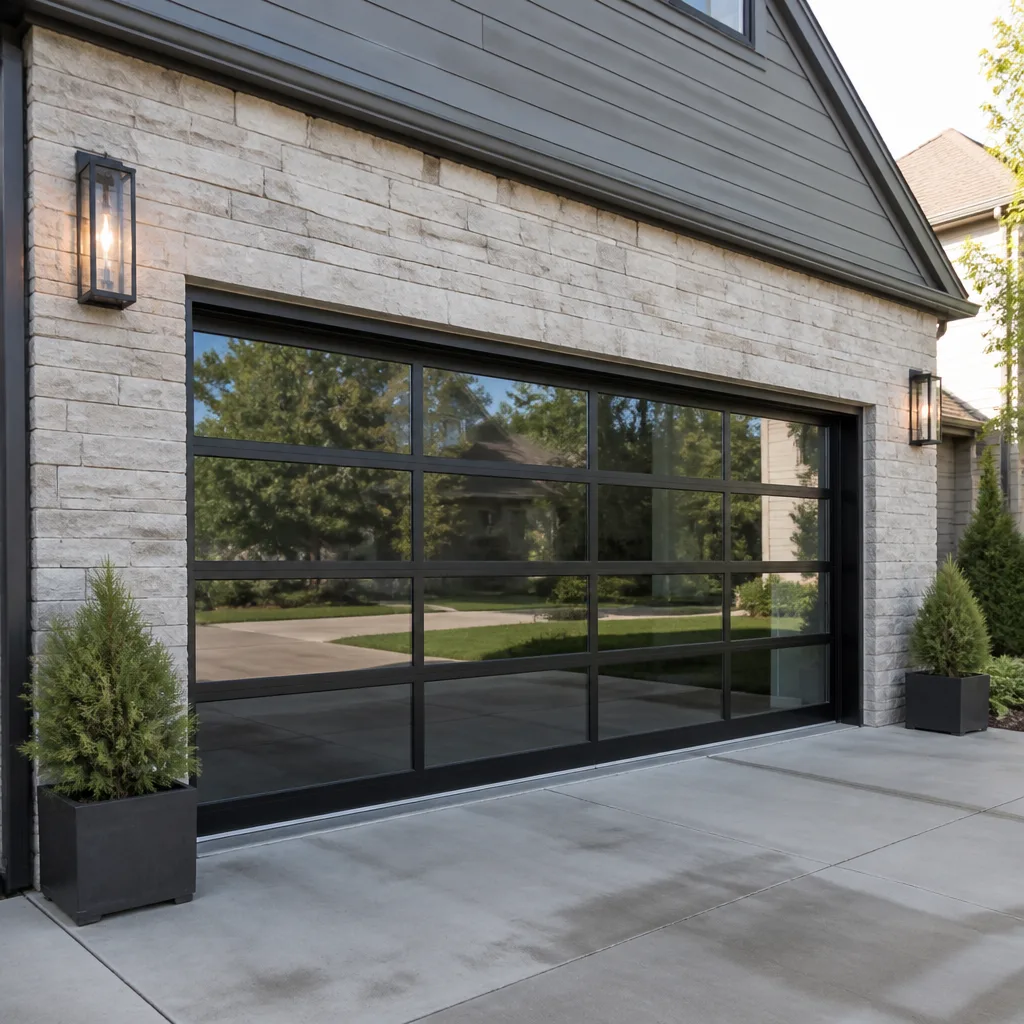 Full-view glass
 LiftMaster openers
 Chamberlain openers
Full 25-point door and opener safety check with every visit - springs, cables, rollers, tracks, and your LiftMaster or Chamberlain opener included
You get a price before we start. It does not change when the pro arrives.
Get your free estimateSeasonal Garage Door Care for Bloomington: Year-Round Homeowner’s Guide
October is the most important month for your garage door in Bloomington, and it has nothing to do with the cold itself. It has to do with metal. A steel door that’s slightly out of balance in September will bind, strain, and eventually fail by January, because the same panel that contracts by morning expands by afternoon and the hardware that holds it together spends four months in constant motion. Most homeowners wait for a symptom, then treat the symptom as the whole problem. This guide treats each season as its own maintenance window, with tasks that belong to that window and nowhere else. You’ll learn what to check before the ground freezes, how to tell a frozen door from a broken spring, what winter hides from you, and the 60-second monthly check that catches most developing problems before they become service calls in Bloomington.
Quick Answer
Seasonal garage door care in Bloomington works best as four separate maintenance windows, not one generic checklist: a pre-freeze audit in fall, freeze-specific awareness in winter, a post-winter inspection in spring, and a repair-and-replace window in summer. The single most valuable habit is a 60-second monthly check of balance, seals, cables, and springs, because it catches most developing problems while they’re still cheap to fix. Most of the money you spend on garage door repair is spent on things that announced themselves early and were ignored.
Styles & brands we work with
- Raised-panel steel
- Carriage house
- Modern flush
- Full-view glass
- LiftMaster openers
- Chamberlain openers
Table of Contents
- The Fall Pre-Freeze Audit: Before the Ground Freezes
- Winter: Frozen Door or Broken Spring?
- Spring: The Post-Winter Inspection
- Summer: Humidity, Heat, and the Right Time for Big Repairs
- The 60-Second Monthly Check That Catches Most Problems
- Your Opener and Door Brand Changes the Care Plan
- Common Mistakes to Avoid
- When to Call a Professional
The Fall Pre-Freeze Audit: What to Do Before the Ground Freezes
Fall maintenance in Bloomington has one deadline: the ground freeze. Once the soil at the edge of your driveway locks up, water has nowhere to go, and a door that sits on a wet threshold all winter will freeze to the concrete sooner or later. Everything you do in October is really about removing the conditions that let water and ice get under the door in the first place.
The bottom seal is the first thing to look at, and it’s the cheapest part on the whole door to replace before it becomes a problem. Run your hand along the rubber between the door and the floor. It should press against the concrete with light resistance the whole way across. If you can see daylight underneath, if the rubber has gone hard and flat, or if there’s a visible gap at one corner, that seal is going to let meltwater pool under the door and refreeze overnight. Replacing it in October costs a fraction of what a warped bottom panel costs in February.
Weatherstripping around the sides and top does the same job vertically. Check for gaps between the door and the frame by closing the door and looking from inside with the garage lights on. Any light coming through is a path for cold air and, worse, for snow that blows in and melts against the door and track. Pay attention to the corners where the side and top seals meet, since that’s where the seal usually separates first.
The pre-freeze audit, in order:
- Close the door and check for daylight across the bottom seal and around the frame. Note every gap; that’s your to-do list.
- Press-test the bottom seal with your hand at several points. Firm, springy rubber is good. Hard, flat, or crumbling rubber gets replaced before the first hard freeze.
- Install or refresh threshold sealing at the point where the concrete meets the door. A clean, dry threshold holds up to freeze cycles far better than one that’s collecting grit and old caulk.
- Test the balance of the door by disconnecting the opener and lifting it halfway by hand. It should hold that position without help. A door that drifts down needs spring tension attention, and a spring that’s struggling in October is a call in January.
- Listen to the opener on a cold morning. New grinding, a longer travel time, or a hesitation at the start of travel tells you the opener is working harder than it should.
- Clear the track of grit and debris with a dry cloth. Grit that gets wet and refreezes in a track is a door that binds on the way down.
- Check the lubricant on the hinges, rollers, and springs (the torsion bar, not the coils themselves). A little lubricant before the cold sets in makes a noticeable difference in how the door moves all winter.
We see fall audits in Bloomington that catch a bottom seal with a half-inch tear and a door that’s drifted out of balance by maybe a quarter inch. Neither seems urgent. Both turn into the calls we take most often once the temperature drops and the door starts binding on the way up. That’s the pattern: the problem is present in October and the symptom arrives in December.
Winter: Frozen Door or Broken Spring?
This is the single most useful thing to know about winter garage doors in Bloomington: a door that won’t open on a cold morning is usually not broken. It’s frozen. The bottom seal has bonded to the concrete, or ice has built up inside the track, and the door is fighting something it can’t win. Getting this diagnosis wrong is how a small winter inconvenience becomes an expensive winter repair.
How to tell the difference
The frozen door has telltale signs. The opener runs and the door strains in place, then the opener’s safety reverse kicks in and the door goes back down. You might hear the motor but see no movement at all. Looking at the bottom seal from inside, you’ll see the rubber pulled tight and stuck flat to the concrete, and you’ll often find ice along the threshold or in the track at one end. Tap the bottom of the door gently and you’ll feel the resistance.
A spring failure is different. The opener runs and the door doesn’t move, but there’s no resistance at the floor; the door is simply too heavy for the opener to lift because the spring is no longer helping. If you look at the springs above the door (from the floor, never close up) and see a visible gap in a coil, that’s a broken torsion spring. On extension springs along the sides, you may see a stretched-out, separated spring hanging loose. Either way, the door is now a dead weight the opener was never designed to lift.
The third scenario is an opener failure, and it usually presents as the light coming on with no motor sound, a remote that’s stopped working, or a motor that runs without moving anything. On a Craftsman or LiftMaster opener in Bloomington, the symptom of the motor running but the door not moving, when the springs are intact and the door lifts freely by hand, is an opener issue and not a spring issue.
The mistakes that cause expensive damage
- Forcing the door up with the opener when it’s frozen to the floor. The opener pulls against a door that can’t move, which strains the drive gear, the belt or chain, and the trolley. What would have been a frozen seal becomes an opener repair.
- Prying the door up by hand to “break the ice” without first disconnecting the opener. A door that suddenly comes free has nothing balancing it, and it drops hard on the track or the frame.
- Pouring hot water on the seal or threshold. It melts the ice, and then it refreezes as a solid block of ice in the same spot, usually worse than before. If you need to free a frozen seal, use a low-output heat source or simply let the door wait for a warmer part of the day.
- Chipping ice out of the track with a screwdriver or chisel. This is how track gets bent and seals get torn. A plastic scraper, gently, or a professional.
- Assuming a frozen door means the springs are bad and booking a spring replacement you don’t need. If the door lifts freely by hand when the ice is gone, the springs are fine.
Winter in Bloomington never asks a door to do anything unusual. It asks the door to do the same thing it always does, in conditions that punish every loose seal and every bit of imbalance you didn’t fix in the fall. If a door does freeze, the fix lives in the fall audit you skipped: a new bottom seal and a clean threshold, and the problem doesn’t come back next year.
Safety note: the torsion springs above the door and the cables running along the sides are under extreme tension, and a manufactured door is heavier than it looks. Never attempt to adjust, remove, or replace a spring or cable yourself. This is the highest-risk repair in the trade, and it’s the reason we handle spring replacement by trained hands only. If a spring looks broken, keep the door closed and call.
Spring: The Post-Winter Inspection
Once the freeze cycles are over, the door has a full winter’s worth of strain on it that no one saw. Spring inspection is about finding that accumulated wear before it produces a failure in the middle of a busy week. In Bloomington, the ground thaws unevenly, and a driveway that heaved slightly over the winter will make a door that sat flush in November sit unevenly in April. That single change puts new stress on the bottom seal and the track.
The cables are the part most homeowners never look at. They run from the bottom corners of the door up to the spring assembly, and they take the load when the door is down. Over the winter, a cable can fray inside its sheath or at the drum end, and the fraying is usually invisible until you look closely with a light. Feel the cable through a cloth glove (never bare-handed, and never put your hand in a position where it could get caught if the door moves) and check for kinks, fraying, or a cable that’s jumped its drum. A failing cable is a safety issue, not a wear item to live with.
Rust spots appear on steel doors in spring, typically along the bottom edge, at the hinges, and near the rollers. Left alone, rust pits the panel and starts working under the paint, and a pitted panel is a panel that’s going to be replaced. Light surface rust cleans up with a scouring pad and a rust-inhibiting primer and paint, quickly, before the heat and humidity of summer give it a growth window.
The post-winter inspection checklist:
- Run the door through a full open and close cycle. Watch it and listen. Any hesitation, grinding, or uneven travel is worth a closer look.
- Inspect the cables from the bottom corners up to the drums. Look for fraying, kinks, or slack on one side but not the other.
- Check the panic release on any automatic opener by testing the manual release. It should let the door down smoothly, and it should reset cleanly.
- Look for rust at the bottom edge, the hinges, and the fasteners. Treat any you find promptly.
- Re-run the balance test. If the door has drifted out of balance over winter, spring is when to correct it, not next winter.
- Inspect the opener’s strain signs: longer travel time, extra noise, a light that flickers on a heavy cycle. An opener that limped all winter is an opener that will fail this summer.
- Look at the tracks for a visible bow or a gap at a bracket. The freeze cycle pushes the ground, and the ground pushes the door frame.
Spring is also the best time to schedule the repairs that are lower priority in fall. If your opener has been laboring or your door has a slightly sagging panel, arranging that work in the spring means you’re not dealing with it in a rush in the middle of the next cold snap. A garage door repair visit in April is a lot easier to live with than one in the middle of a January morning.
Summer: Humidity, Heat, and the Right Time for Big Repairs
Summer gets treated as garage door downtime, but Bloomington’s summer humidity does real work on certain doors and certain hardware. Wood doors swell slightly in high humidity, which can bind a door in its track or make a panel harder to close than it was in May. Track steel expands a little in heat and contracts when the afternoon storm rolls through, so gaps that were closed in spring can open up by August. And the heat matters for the same reason the cold does: the door cycles between expanded and contracted states all day, and any hardware that’s slightly loose gets looser.
The heat itself isn’t the enemy; the humidity is the one to watch. A wood door that’s binding in summer is telling you to look at the moisture content of the panels and the seals, and a steel door that’s suddenly noisy in August is usually telling you the track has shifted or the rollers have aged, not that the door has failed. Wooden doors need a careful look at the finish every couple of years. Any spot where the finish has worn through is a spot that holds water and starts to rot.
Summer is also the most practical time of year to plan a cable or spring replacement that isn’t urgent yet. If either is aging (a door that’s been on the same spring for a long time, or a cable that’s looking tired but not yet frayed), you have three choices in summer: replace it now on your schedule, wait, or replace it in a hurry when it fails in a cold snap. Replacing hardware on a warm day is a straightforward appointment, and it leaves you heading into fall with a door that’s fully sorted rather than one that’s a coin toss.
What summer asks of your door:
- Wood doors: check the finish, the panel joints, and any swelling at the bottom edge. Address worn finish before fall.
- Steel doors: look at the track for a heat-shifted gap, and listen for new noise; the rollers and hinges may need attention.
- Openers: a warm garage puts less strain on an opener than a cold one, which makes summer the best window to diagnose an opener that’s been struggling.
- Aging hardware: if the spring or cable is nearing the end of its useful life, summer is when to replace it, not winter.
If your plan is to replace the door or the opener rather than repair it, summer is when that decision is easiest to make, because new-door work is a measure, order, and schedule job, not an emergency. The same is true for a full replacement: it’s booked and planned, and you get a written price on the exact door and hardware before anything is ordered. Our Bloomington garage door repair team handles both the repair and the installation side, so you’re not handing the job between subcontractors.
The 60-Second Monthly Check That Catches Most Problems
This is the highest-value habit in this guide. Once a month, take a minute to run through a short check, and you’ll catch the large majority of developing problems while they’re still small. It isn’t a replacement for professional service, and it’s important you run it on a door that’s disconnected from the opener and free of load. But the check itself takes under a minute and it’s the same check whether it’s January or July.
The monthly 60-second check:
- Listen. Press the opener button and listen to the entire open and close. New sounds, a grinding note, or a labored start is information.
- Look at the balance. Disconnect the opener and lift the door to waist height. It should hold. If it drifts, the springs are changing.
- Check the bottom seal by looking at the floor line from inside with the door closed. Any gap is a problem waiting for weather.
- Check the cables at the bottom corners with a light for fraying or a slack line on one side.
- Look at the springs from the floor for a visible gap in a coil (a break) or a stretched extension spring.
- Test the reverse safety on the opener by placing a solid object where the door path would meet it and confirming the door reverses on contact.
- Walk the tracks visually for a bow, a gap, or a loose bracket.
None of these tasks require you to put your hands near a moving part, reach any high-tension component, or adjust anything. The whole point is to catch a symptom and decide whether it needs professional attention. If you find a symptom but aren’t sure what it means, call before the problem grows. If you find a broken spring or a frayed cable, stop and call. Our garage door spring repair team handles that end of it, and it’s the most common call we get, because springs are the part of the system that does the most work over the longest life.
Your Opener and Door Brand Changes the Care Plan
A seasonal care plan is only as good as the equipment it’s applied to, and different brands age differently. A 15-year-old Craftsman opener and a modern LiftMaster are both good systems, but they signal wear differently and they respond to maintenance differently. Knowing what’s on your door and opener changes what you should be looking at each month.
We service and repair openers from LiftMaster, Chamberlain, Genie, and Craftsman, including the smart and Wi-Fi-connected models that have become common in Bloomington homes. We work on doors from Clopay, Amarr, Wayne Dalton, and Raynor. That matters for seasonal care because the same symptom can mean different things by brand: a Chamberlain with a grinding motor is a different diagnosis than a Genie with a grinding motor, and the fix isn’t interchangeable. Our technicians have up to 10 years of experience across those eight brands, and the service they do is the same work whether the door is a decades-old Raynor or a new LiftMaster install.
One practical point for the monthly check: if your opener is a smart model with app-based alerts and a history log, use it. A door that’s reporting a longer open time week over week, or a safety reverse that’s triggering more often, is a door that’s telling you something is different. The app is an early warning you already own. Check it the same way you check the seals.
For the opener-specific diagnosis side of things, our garage door opener repair work covers the control board, the travel sensors, the safety reverse, and the mechanical drive, so a failing opener gets diagnosed and fixed rather than replaced by default. Most openers that are struggling aren’t actually dying. They’re working harder than they should because something else on the door changed, and the fix is usually upstream of the opener.
Common Mistakes to Avoid
- Waiting for a symptom before doing any maintenance. The fall audit and the monthly check exist to catch problems before they have symptoms. Skipping them is how a door that needed one small fix in October needs a large repair by January.
- Forcing a frozen door open. The opener doesn’t know the door is stuck to the floor. It pulls anyway, and you pay for an opener repair on top of a frozen seal.
- Replacing a bottom seal with a cheap universal strip. Bloomington’s freeze cycles punish a seal that doesn’t sit tight against the concrete. A proper seal installed correctly is the difference between a dry winter and a frozen threshold.
- Assuming a noisy door in summer is just a door. Summer noise usually means a shifted track, aged rollers, or a wood door swelling. Left alone, those become bigger repairs by fall.
- Adjusting springs yourself after reading about it online. High-tension springs hold enormous stored energy, and the injury risk is real. It’s the highest-risk DIY repair in the trade, and no online instructions make it safe.
- Treating a frayed cable as a wear item. A frayed cable is a safety issue. It can snap with the door down and leave a heavy door hanging on one side of the track.
- Skipping the spring inspection because “it still works.” A door that still opens but has a frayed cable or a stretched coil is one cold snap away from a failure that’s not on your schedule.
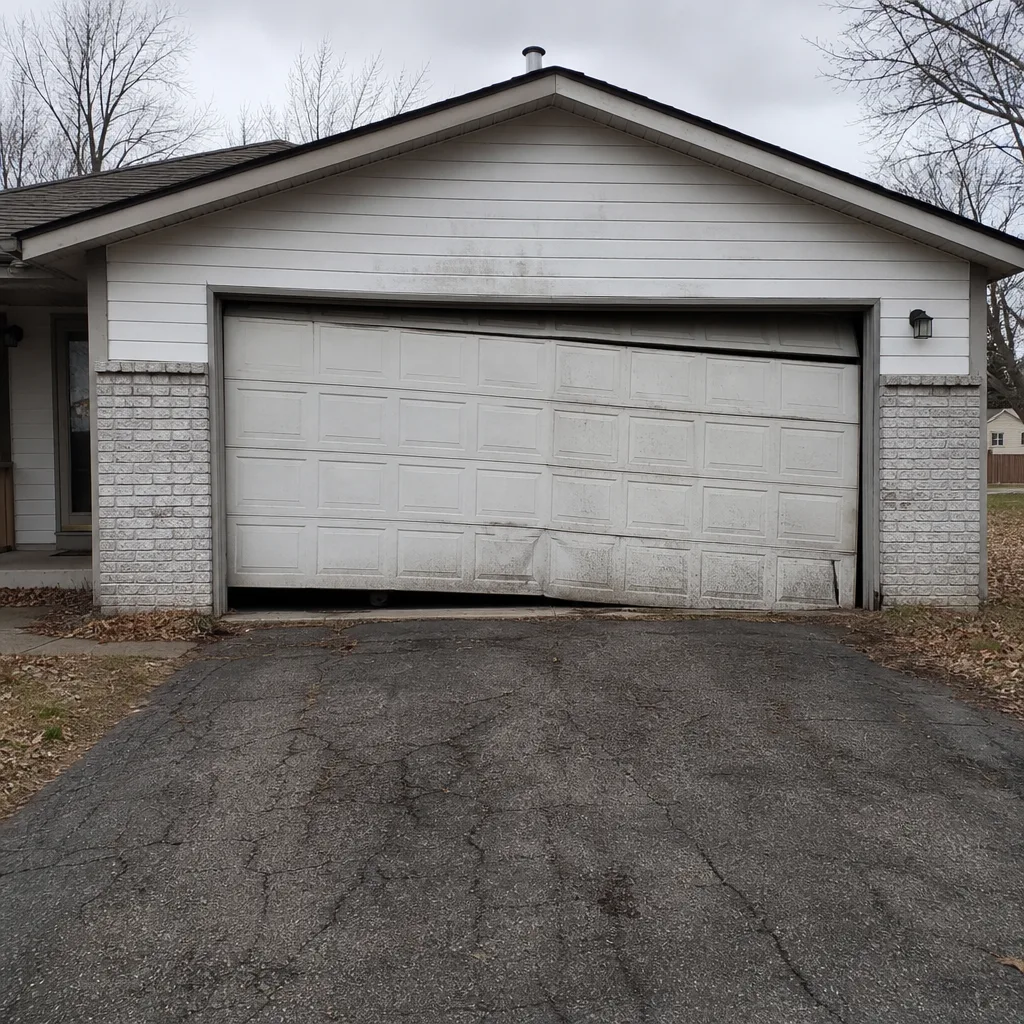
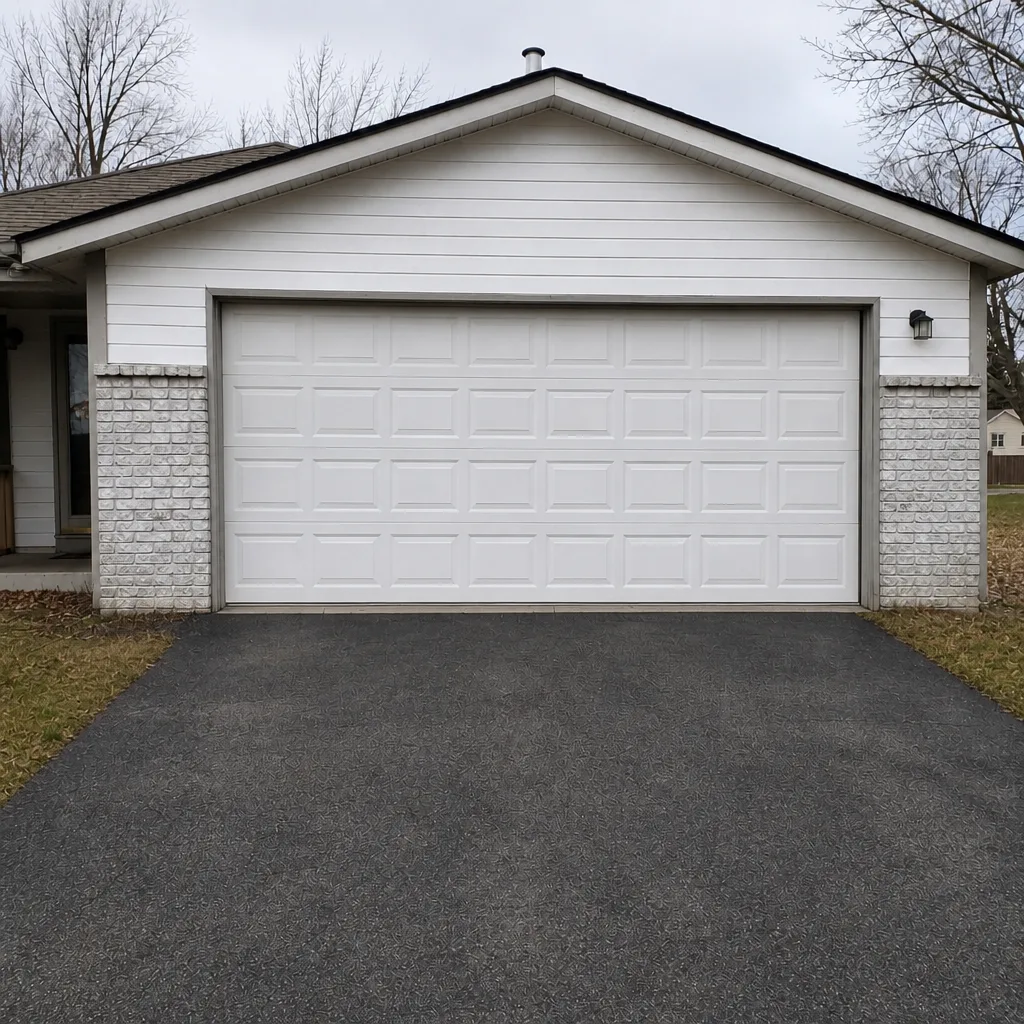
See the difference
 Before
 After
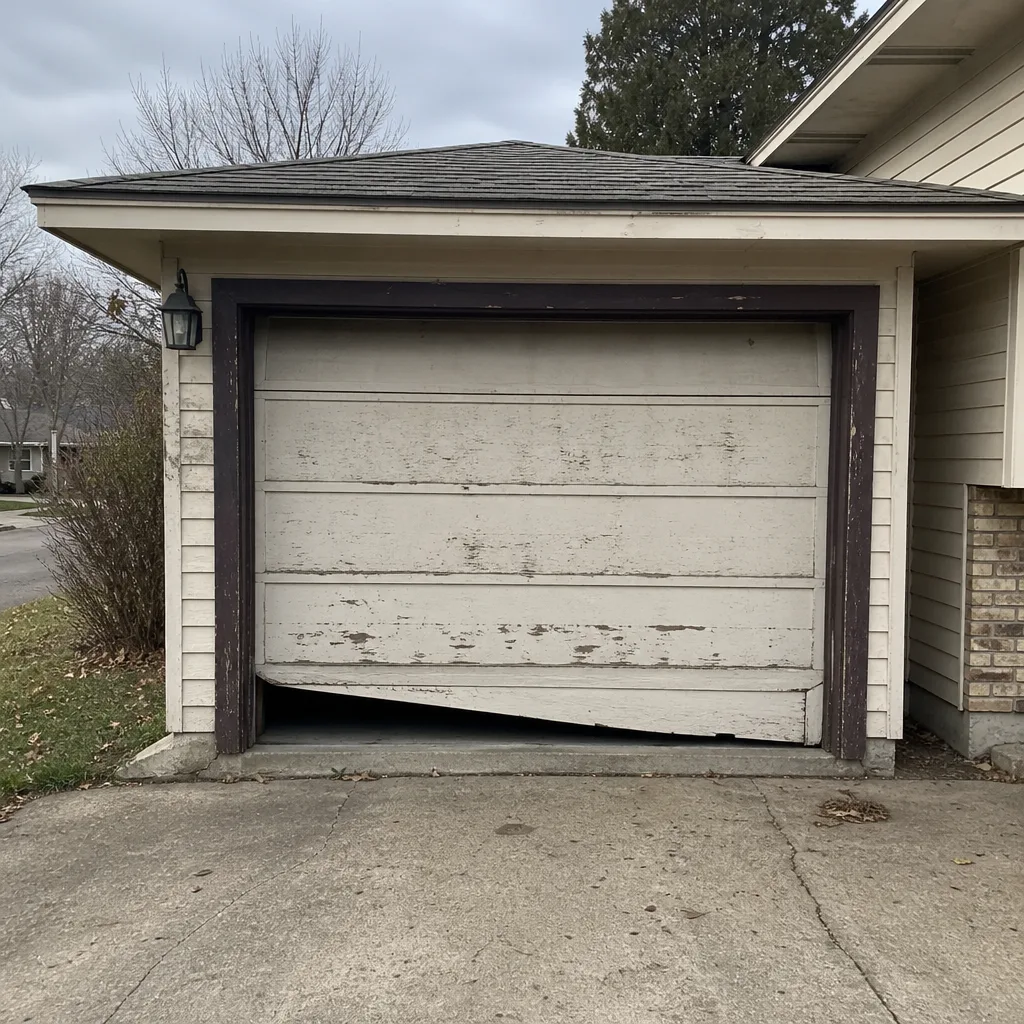 Before
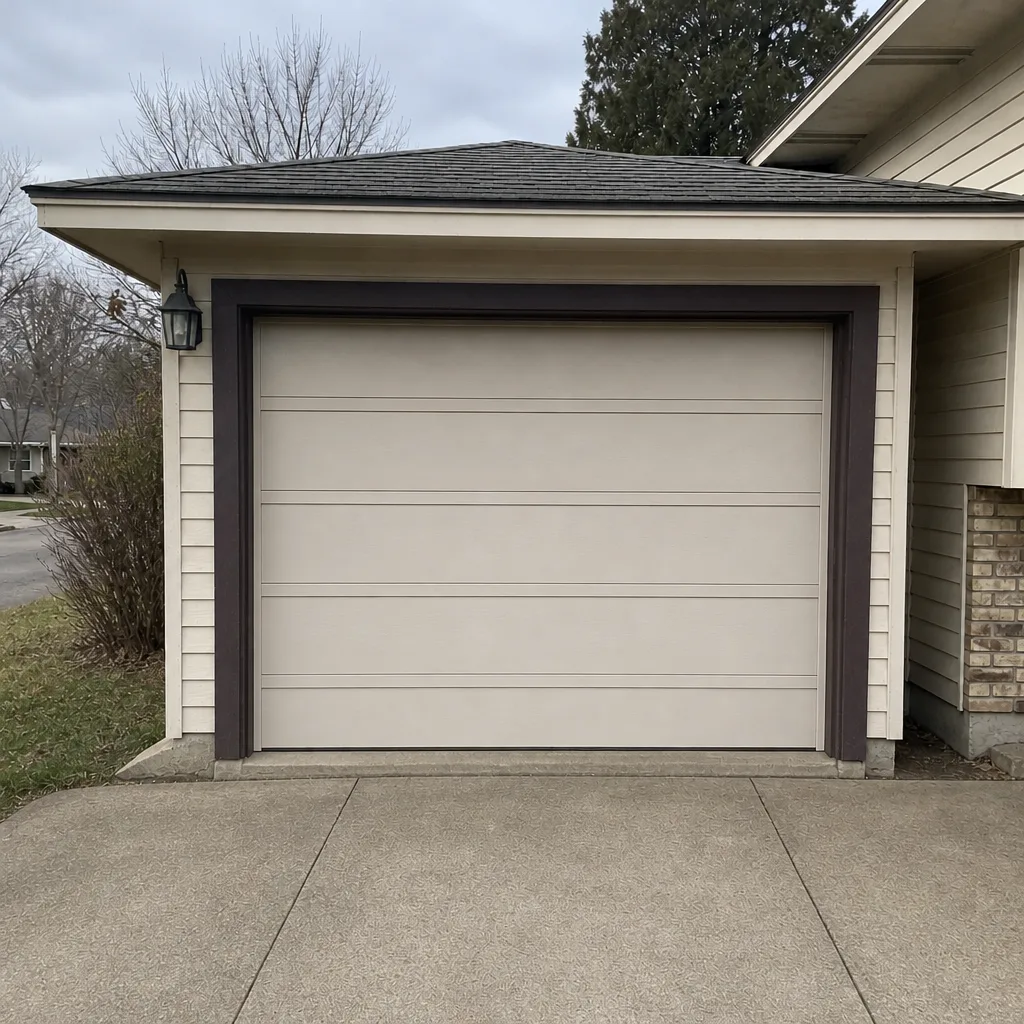 After
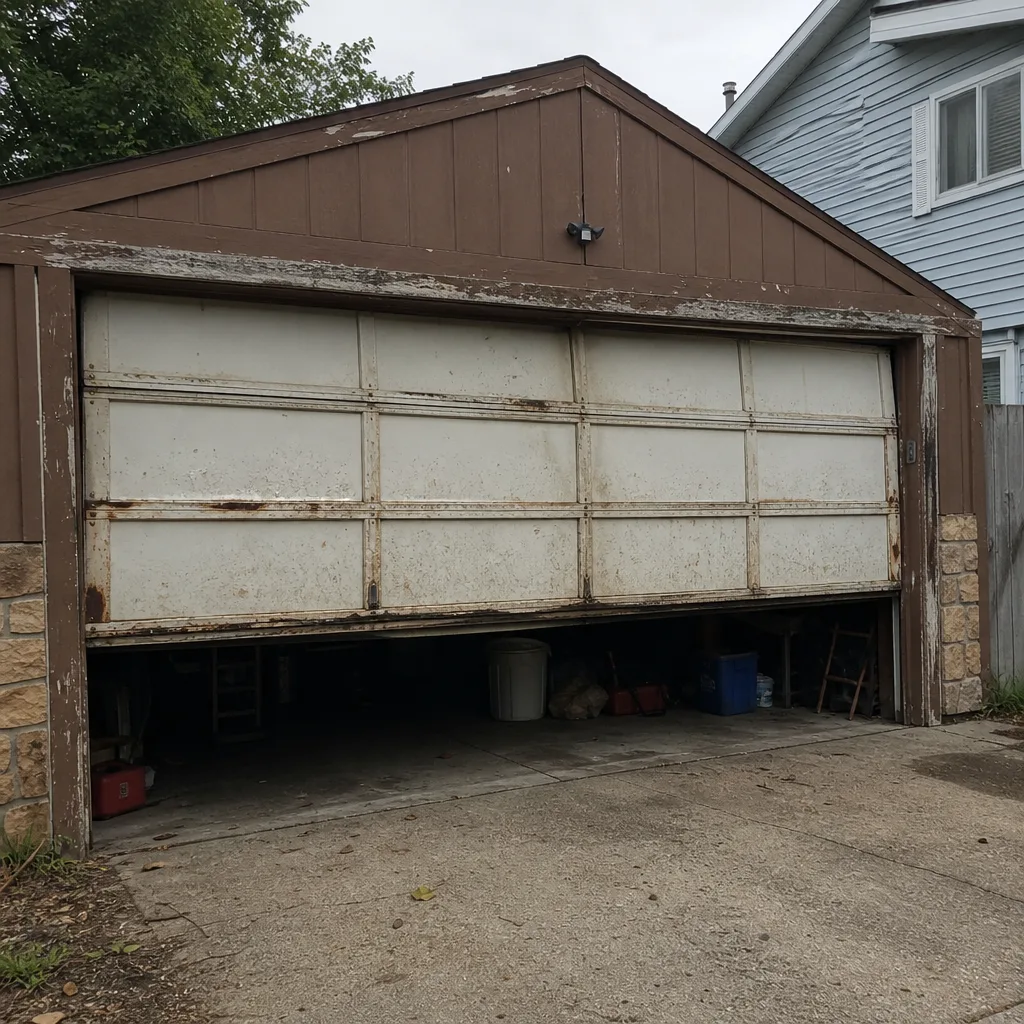 Before
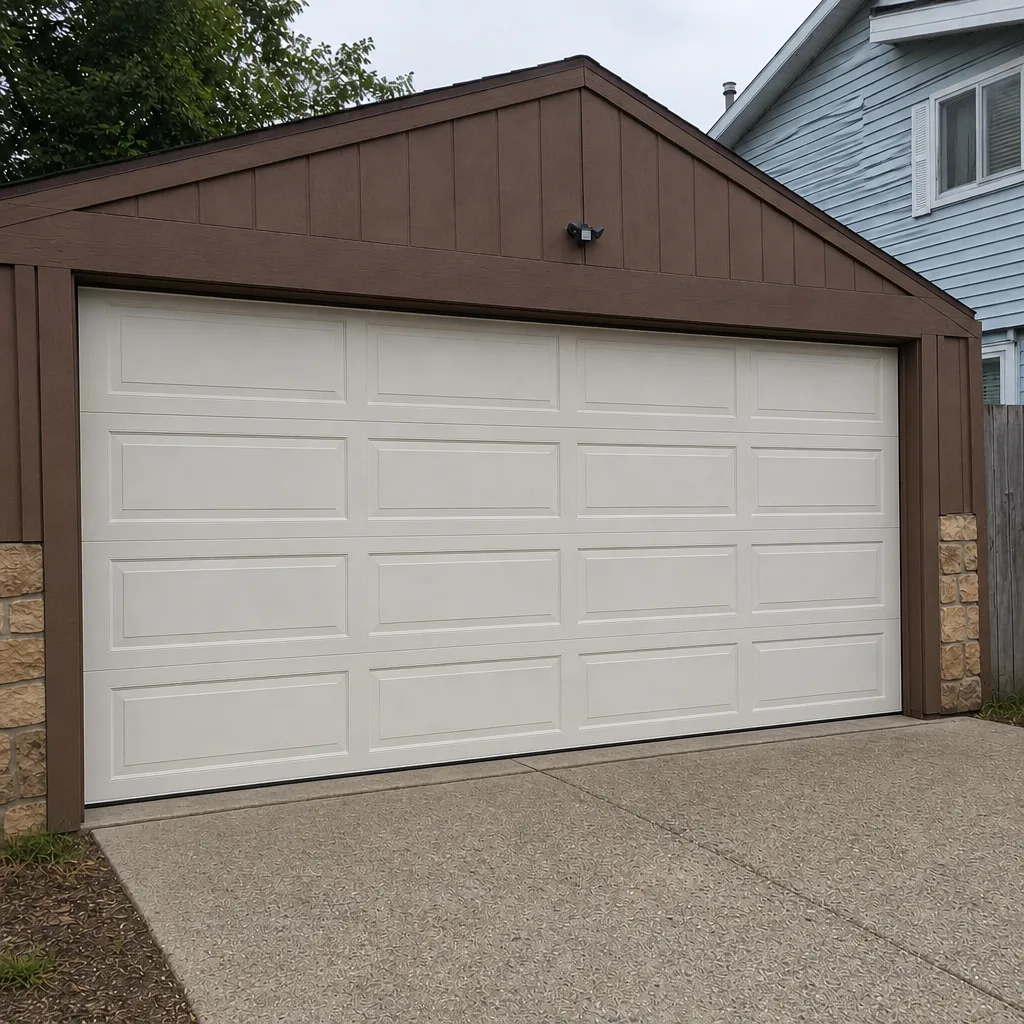 After
When to Call a Professional
Call a professional the moment you find any of the following: a visible gap in a torsion spring, a stretched or separated extension spring, a frayed or kinked cable, a door that won’t hold its balance position, a door that’s suddenly harder to lift by hand, a track that’s visibly bowed or has pulled away from a bracket, an opener that runs but doesn’t move the door, or a safety reverse that fails the test. Also call if a door that was working in November is binding in the cold, since the most likely fix is a seal or balance issue you’ll want handled before it strains the opener. Spring, Febreeze, and thresholds are homeowner checks; spring tension, cables, and opener internals are not.
Bloomington Garage Door Repair Pros offers free estimates in Bloomington. Our technicians have up to 10 years of experience across repair, opener repair, spring repair, installation, and emergency response, and we handle the full spectrum under one company so you’re not passed to a different specialist for each job. Call (855) 904-7314 for a free estimate and an upfront price before any work starts. We answer 24/7. Fast dispatch from 7am to 7pm, Sunday through Friday, with same-day service available for urgent calls.
Frequently Asked Questions
Four times a year, timed to the four windows in this guide, plus a 60-second monthly check. The fall audit is the most important of the four because it happens before the first hard freeze, and a seal or balance problem found in October is a much smaller repair than the same problem found in January. The monthly check is what keeps problems from reaching the seasonal windows at all. Call (855) 904-7314 for an exact quote on anything the check turns up; estimates are free.
It’s most likely frozen to the floor or stuck in an ice-bound track, not broken, if the opener strains but the door doesn’t move and there’s no visible gap in the springs. If the door has no resistance at the floor and the opener runs without lifting it, or the springs show a visible break, that’s a spring failure. Disconnect the opener and try lifting the door by hand once the ice is clear; if it lifts freely, it’s a frozen seal and not a spring. Call (855) 904-7314 if you’re not sure, and estimates are free.
No, the price is quoted and agreed before any work starts, and the written estimate is what you pay. We don’t quote one price over the phone and a different one on site. If the problem turns out to be larger than expected, you’ll hear about it before anything happens, and you’ll have the option to approve or decline. Call (855) 904-7314 for an exact quote; estimates are free.
Replace them in summer if they’re aging, and don’t wait for a break. Spring replacement is a scheduled job when it’s planned and an upsetting one when it fails, and summer is the easiest season for a scheduled appointment because the door isn’t fighting cold or ice. A spring that’s been on the door a long time is a candidate for replacement, not a candidate for a wait-and-see. Call (855) 904-7314 for a free estimate and we’ll give you a written price per spring.
We service openers from LiftMaster, Chamberlain, Genie, and Craftsman, and doors from Clopay, Amarr, Wayne Dalton, and Raynor. If your equipment is from one of those brands, we can handle the repair, the opener diagnosis, the spring work, and the installation without handing you to a different specialist. Call (855) 904-7314 with the brand and model and we’ll confirm before we come out. Estimates are free.
Yes, same-day service is available for urgent calls, and spring failures and doors stuck open or closed get priority. We answer 24/7, so call whenever the problem happens. Fast dispatch from 7am to 7pm, Sunday through Friday, and a call outside dispatch hours gets booked into the next opening. Call (855) 904-7314 and we’ll give you the earliest available appointment and an upfront price.
The Bottom Line
Bloomington gives a garage door four different kinds of stress, and a care plan that ignores that will always feel like it’s running behind. The fall pre-freeze audit protects the door and the threshold. Winter is about correct diagnosis, since a frozen door is not a broken one. Spring is when you find what the winter did, especially at the cables and the finish. Summer is when the repairs that aren’t urgent yet are easiest to schedule. And the 60-second monthly check catches most of what’s developing before any season gets a chance to make it worse. Do those four things, and your door stops being a source of surprise.
When something needs a professional, call (855) 904-7314. We answer 24/7, and fast dispatch runs from 7am to 7pm, Sunday through Friday. The estimate is free and the written price is set before any work starts. We handle spring repair, opener repair, repair, and full installation across eight major brands, so no matter what’s on your door, you’re talking to the right people. Take a minute this week and run the monthly check. It’s the cheapest maintenance you’ll ever do.
Written by the team at Bloomington Garage Door Repair Pros.