
Last updated November 21, 2026
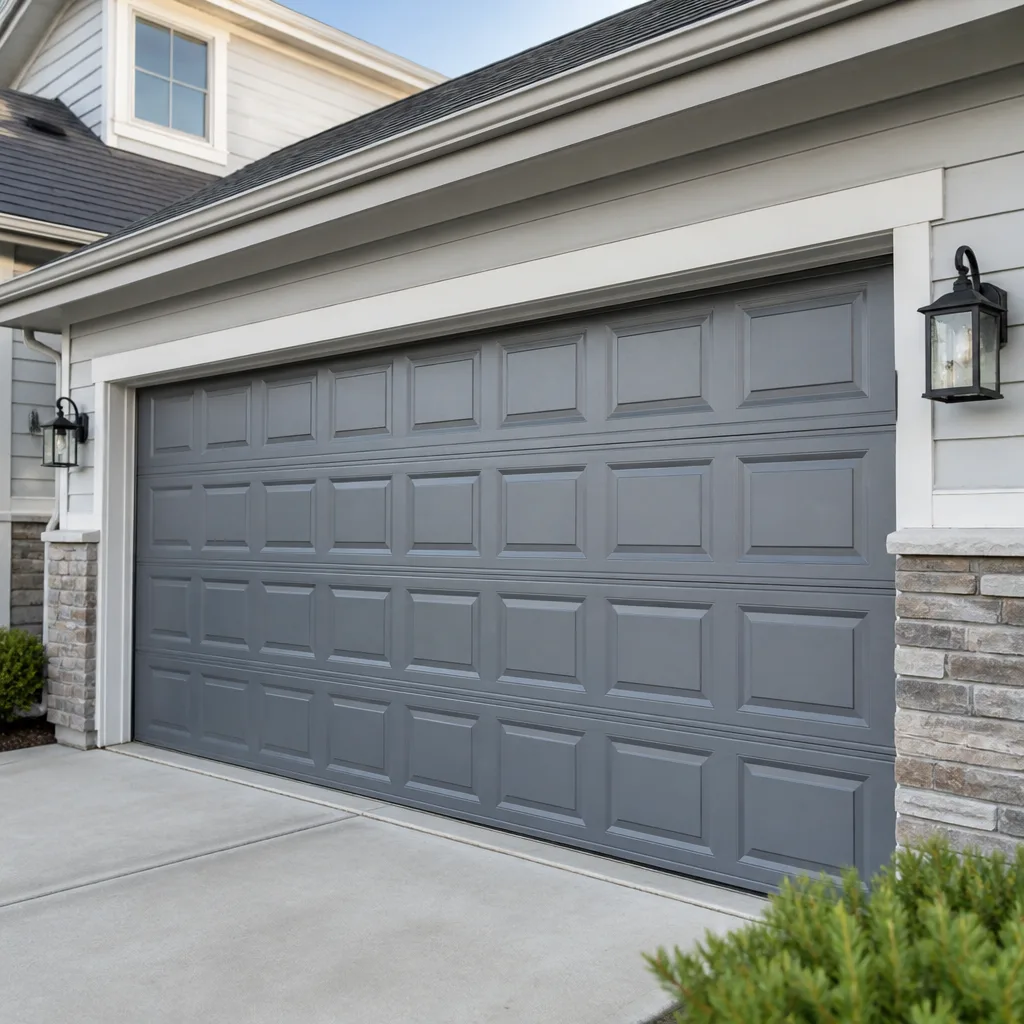 Raised-panel steel
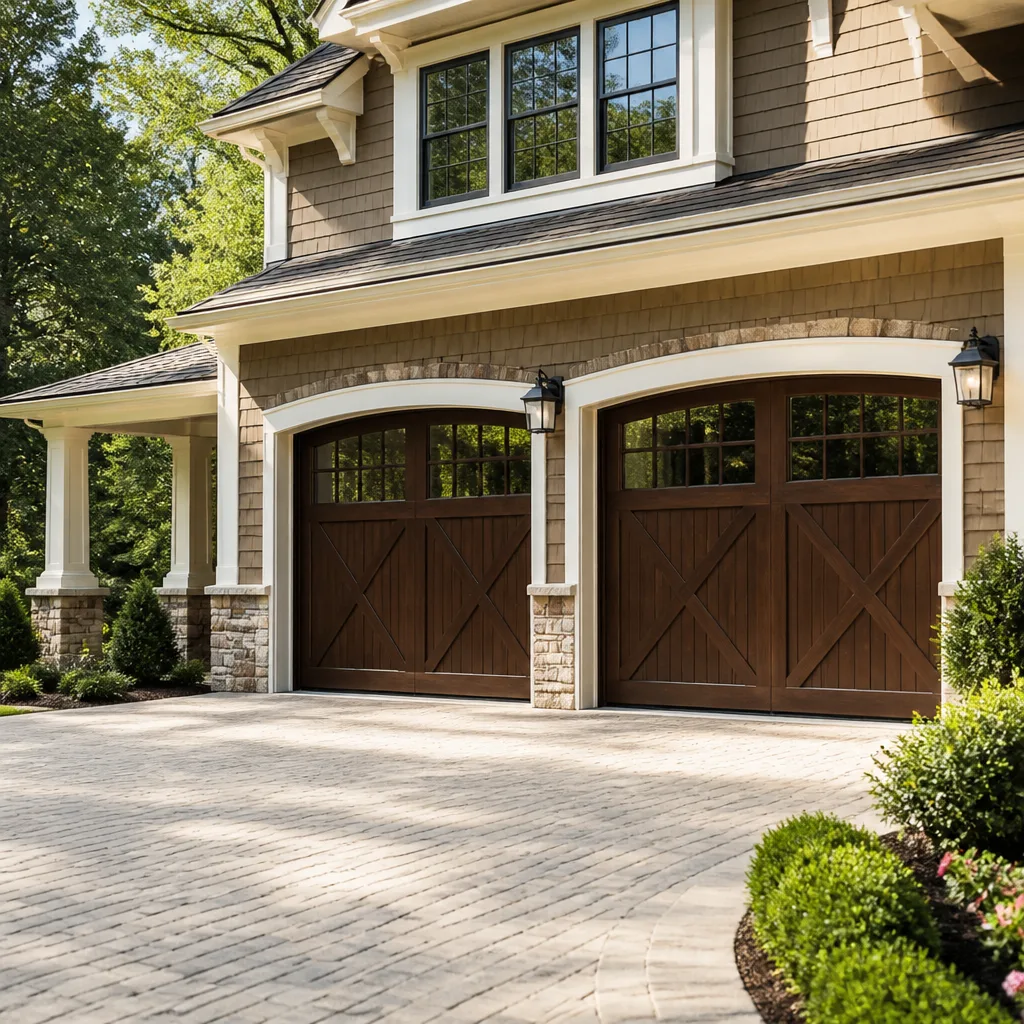 Carriage house
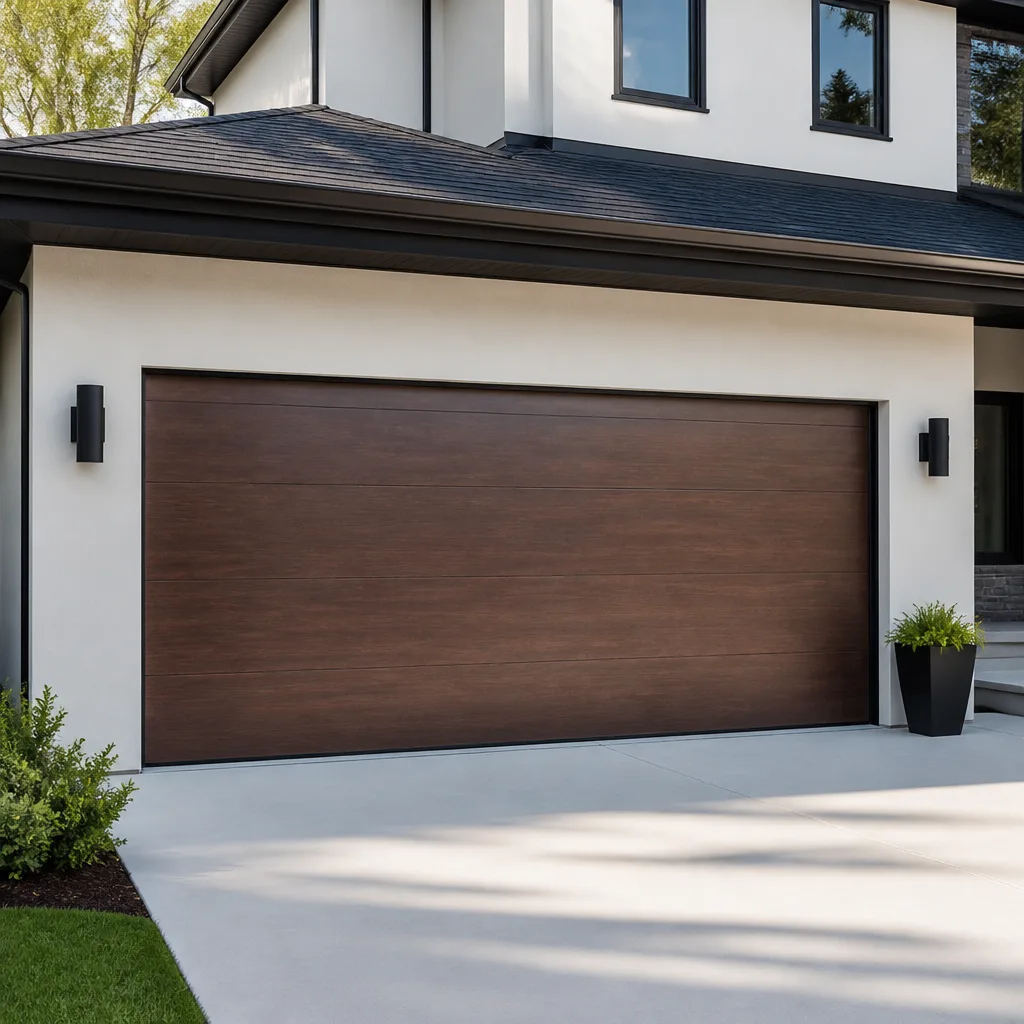 Modern flush
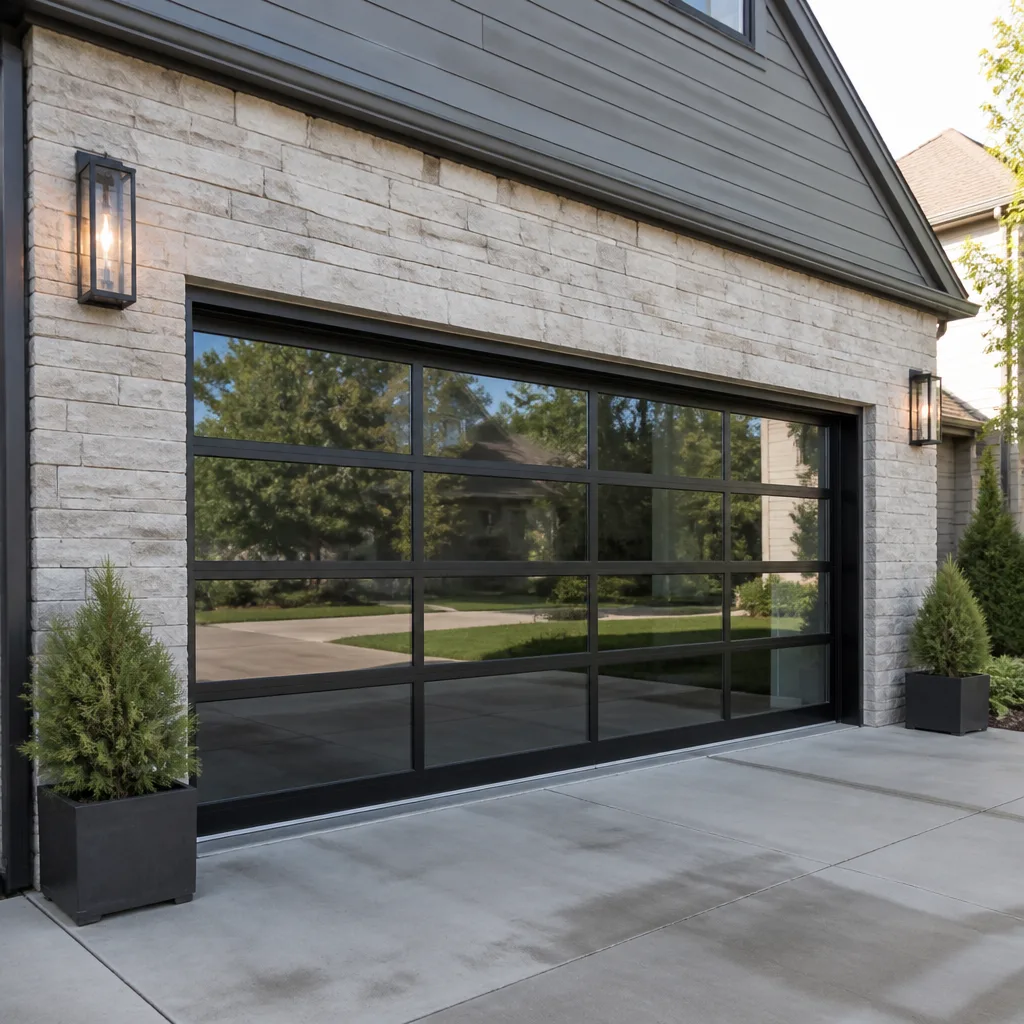 Full-view glass
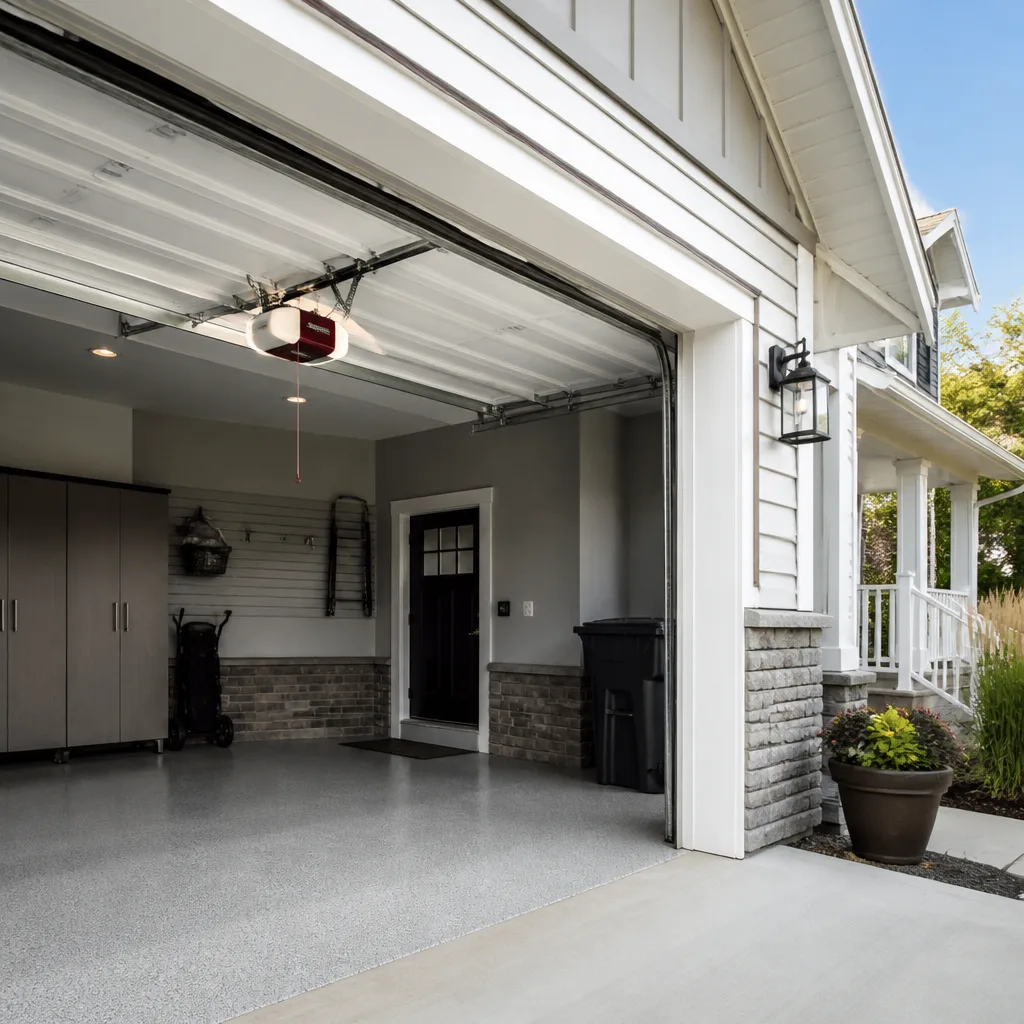 LiftMaster openers
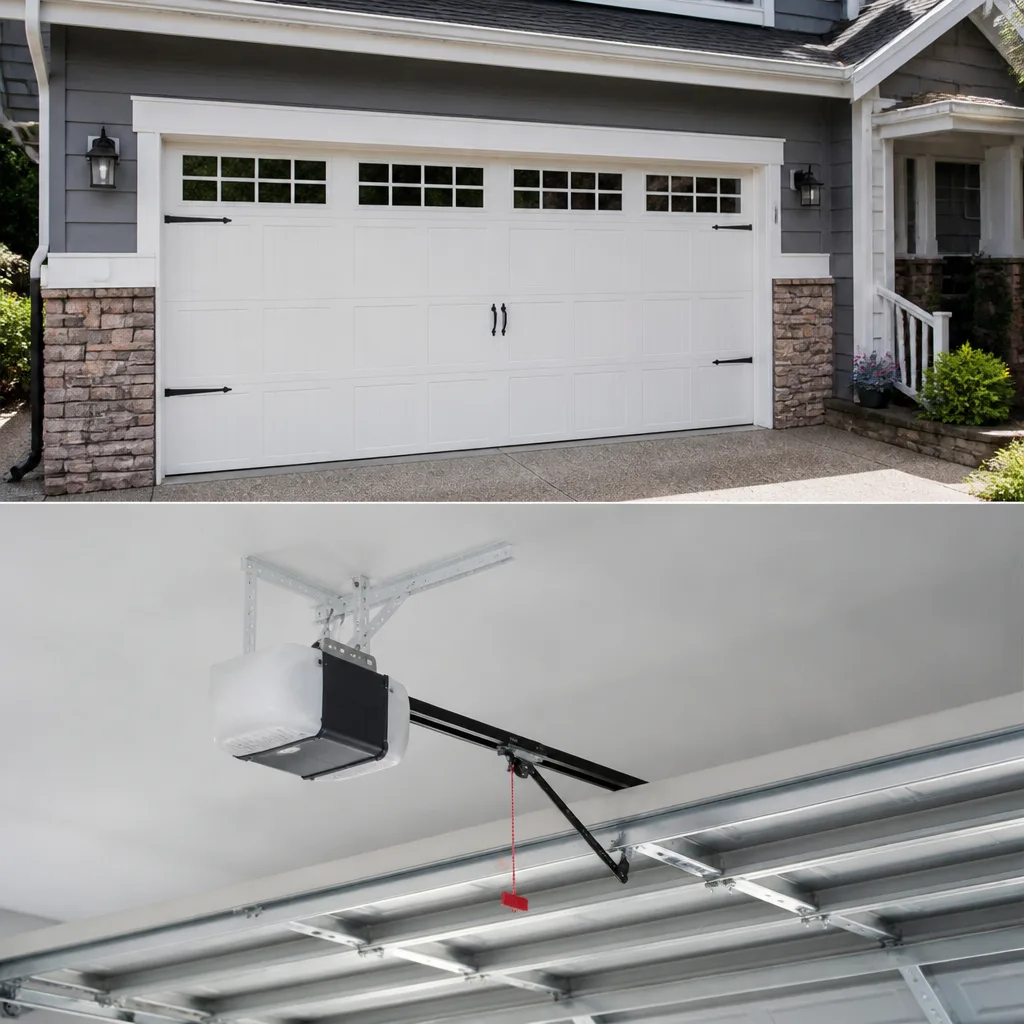 Chamberlain openers
Full 25-point door and opener safety check with every visit - springs, cables, rollers, tracks, and your LiftMaster or Chamberlain opener included
You get a price before we start. It does not change when the pro arrives.
Get your free estimateThe Complete Guide to Garage Doors in Bloomington
Your garage door moves more than any other mechanical object in your home – an average of 1,500 cycles per year – yet most Bloomington homeowners can’t name a single part of it until something snaps at 7am in February. That’s the counterintuitive truth about garage doors: the most-used machine in the house is also the least understood. This guide maps every component, every predictable failure point, and every local consideration that matters in Bloomington, from freeze-thaw cycles to the repair-versus-replace decision. By the end, you’ll know exactly what you’re dealing with before anything breaks.
Quick Answer
A garage door in Bloomington is a spring-driven mechanical system that averages 1,500 cycles a year and wears in predictable patterns tied to Minnesota’s freeze-thaw cycles. Springs, cables, and bottom seals fail first because they absorb the most stress from temperature swings. Most repairs cost a few hundred dollars, while a full replacement costs well over a thousand – the threshold where replacement wins sits around the halfway mark of the door’s expected lifespan.
Styles & brands we work with
- Raised-panel steel
- Carriage house
- Modern flush
- Full-view glass
- LiftMaster openers
- Chamberlain openers
Table of Contents
- How Bloomington Winters Stress Your Door
- Component-by-Component Breakdown
- How Long Parts Last in Minnesota
- Repair or Replace: The Dollar Threshold
- Door Styles and Materials That Hold Up
- Reading Your Door’s Behavior
- Monthly Checks You Can Do Yourself
How Bloomington Winters Stress Your Door
Bloomington sits in a climate that swings hard, and your garage door feels every swing. A nineteen-degree January morning followed by a thawing afternoon moves the metal, the seals, and the springs through a daily expansion and contraction cycle. That cycling is the single biggest reason garage doors fail faster here than in milder parts of the country, and it shapes which components wear first.
Springs take the worst of it. As the temperature drops, the metal in a torsion or extension spring becomes more brittle, and each cycle puts it under load it wasn’t flexing at in July. When the same spring has already cycled thousands of times through the year, a cold snap is often the final straw. Cables feel the tension too, and a cable that was already fraying can snap clean when the ice pulls the door off balance.
Bottom seals and weatherstripping age differently here as well. In Bloomington, a rubber seal has to survive both summer heat that bakes it and winter ice that grips it. When water from melted snow refreezes around the base of the door, the seal can tear or pull free. That allows drafts, and a draft means every warm garage you heat in Bloomington loses some of it.
The travel path suffers too. Freeze-thaw cycles shift the concrete aprons under the door and can throw a track slightly out of plumb. A track that’s out of alignment makes the door drag, which stresses the opener and the springs on every cycle. If your door gets noisy and slow every February, that’s not imagination – the hardware really is working harder. Catching these seasonal stress points early is the cheapest way to keep your door running, and it’s why our garage door repair work peaks the same week the ice does.
What matters most in Bloomington is recognizing that the door is a system, not a panel. The spring, the cable, the roller, and the seal all depend on each other. When one gets stressed, the others compensate until something gives.
Component-by-Component Breakdown
Every sectional garage door is built from a handful of parts that do specific jobs. Knowing what each one does tells you what breaks, why, and roughly what it costs to fix. Below is the breakdown we walk customers through every week in Bloomington.
The springs (the muscle)
Springs do the lifting. A typical door has either one torsion spring mounted on a shaft above the door or a pair of extension springs running along the tracks. Springs are responsible for balancing the door’s full weight, which is why a single spring carries enormous stored tension. When a spring breaks, the door becomes dangerously heavy to lift by hand. Spring replacement in Bloomington typically runs $180 to $340 for one spring, and a matched pair almost always gets replaced together, so a pair runs roughly twice that. Our garage door spring repair specialists handle this because it’s the highest-risk repair in the trade – high-tension springs and cables can cause serious injury, so this isn’t a job for a homeowner to attempt.
Cables, pulleys, and drums
These guide the door up and down and connect the springs to the door’s bottom corners. Cables fray over time, especially in wet freeze-thaw conditions. Cable and pulley repairs typically run $120 to $220 in the Bloomington market. A snapped cable is a call-a-pro-now situation because the door can come down unevenly.
Rollers and hinges
Rollers ride in the tracks; hinges let the panels flex as the door curves. Rollers wear the fastest and are the cheapest fix, usually $90 to $160 for a full set. Noisy operation is the first clue.
Tracks
Tracks are the guide rails. They bend from a bump or shift with the concrete. Track repair or realignment typically $110 to $200, and misaligned tracks will grind away everything else.
Bottom seals and weatherstripping
These keep out drafts, water, and pests. In Bloomington they take a beating from ice and runoff. Replacement is typically $100 to $180 and gives an immediate return in a warmer, drier garage.
The opener
The opener is the brain, not the muscle. Opener repair is a separate skill from door repair, and we cover that in our garage door opener repair work. Opener fixes typically run $120 to $300 depending on the control board, gear assembly, or sensor issue. If you’ve ever wondered why the motor can’t lift a broken-spring door, that’s the answer: the motor isn’t supposed to lift anything, the springs are.
How Long Parts Last in Minnesota
Here’s the part most guides skip: a garage door in Bloomington lives a harder life than the same door in a temperate climate. Below is a realistic expected lifespan for each component when the door gets normal use and the occasional tune-up. You’ll notice the numbers come in lower than what national averages suggest, because our cycles and temperature swings push them lower.
- Torsion spring: 8 to 12 years in a milder climate, closer to 6 to 10 years in Bloomington given 1,500-plus annual cycles and cold-load flexing. Cycles matter more than calendar age.
- Extension spring: shorter, usually 5 to 9 years.
- Cables: 8 to 12 years if the door stays balanced; less if the door has been dragging or the tracks are out of true.
- Steel rollers: 3 to 5 years; nylon rollers can stretch toward 8 to 10.
- Bottom seal: 4 to 7 years, and the winter ice accelerates the wear.
- Opener drive gear: 10 to 15 years, depending on how often it runs.
- Steel door panels: 20 to 30 years if the paint holds; a rust spot starts a long decline.
The pattern in Bloomington is that spring life tracks cycles and cold stress, not calendar age. A door that opens four times a day wears faster than one that opens twice. That’s why we ask how you use your door before we talk about replacement – two Bloomington homes on the same block with the same door can be in very different condition.
If your door is at the top of a lifespan range and the paint is failing, paying for repeated repairs becomes exactly the slow leak that should push you toward replacement. The next section explains that dollar threshold.
Repair or Replace: The Dollar Threshold
Most homeowners assume the choice between repairing and replacing is a judgment call. In practice there’s a simple dollar threshold that makes the decision much clearer: if a repair costs more than roughly half of a full replacement, replacement usually wins. That’s the rule of thumb we use in Bloomington when we’re looking at a door with a mix of aging parts.
Here’s how it plays out with real numbers. A full replacement of a basic single-car door, including installation, usually runs $1,300 to $2,500 in the Bloomington market, higher for double doors, insulated panels, or premium styles. A spring-and-cable job on that same door might cost $300 to $500. That’s clearly a repair. But if the springs, the opener, and the bottom seal are all due within a season, you could spend more than half of replacement on a door that’s still old.
Use this numbered decision path:
- Add up the repairs you need this year. Ballpark them against the ranges in the previous section.
- Compare the total to half of a replacement estimate. Under half? Repair. Over half? Get a replacement quote.
- Consider age and material. A 25-year-old steel door with peeling paint is a replacement candidate even if the current repair is small.
- Think about energy and comfort. An uninsulated door on a finished garage in Bloomington is a comfort problem every winter.
- Get the exact number in writing. The written estimate is the price – no guessing, no surprise invoice.
If you’re near the threshold, a free measure and a written replacement quote can settle it. Reach out for a free estimate and we’ll walk through both paths with you.
Door Styles and Materials That Hold Up
Showroom lighting flatters every door. Bloomington weather doesn’t. Here’s how the common materials actually hold up against our freeze-thaw cycles, wind, and snow load, so you can match what looks good with what lasts.
Steel is the most common choice and the most sensible in this climate. An insulated steel door handles temperature swings well, resists the snow, and holds paint if you keep it sealed. The weak point is rust at the bottom edge where water and salt collect. Clopay and Amarr both make steel doors in styles that fit most Bloomington neighborhoods, from carriage-house looks to clean modern panels.
Aluminum is light and rust-resistant, which sounds ideal, but it dents more easily if anything bumps it. It’s a fine choice for a garage that stays out of the way of lawn equipment and hockey gear.
Wood looks stunning and struggles here. Real wood absorbs, dries, and absorbs again through our seasons, and it needs regular refinishing to survive Bloomington winters. If wood is the goal, look for a steel door with a wood-grain finish instead – you get the look without the maintenance cycle.
Wood composite and fiberglass split the difference. They hold finish better than real wood and resist moisture.
Insulation matters most. An uninsulated door is a thin sheet of cold against your garage, and in Bloomington that means a very cold interior and, if the garage is attached, more heat escaping through the common wall. Insulated panels are worth considering if you park in the garage, work in it, or share the wall with a living space.
Windows, style, and color all matter for curb appeal, but they come after the door’s core material and insulation. A Wayne Dalton or Clopay door in a plain steel panel will outperform a beautiful wood door that can’t keep up with our weather. If you’re weighing a new installation, we handle full replacement and can walk you through brand and style options that make sense for a Bloomington home.
Reading Your Door’s Behavior
Your garage door tells you what’s wrong before it breaks if you know what to look for. The noise, the speed, and the movement are all diagnostic. Here’s a short guide to the signals we listen for when we’re standing in a Bloomington driveway.
Start with sound
A door that used to be quiet and now grinds is telling you about worn rollers or a track that’s out of alignment. A single loud pop followed by a door that won’t lift is almost always a broken spring. Rumbling that gets louder is usually a dry or worn opener drive. Squeaking means dry hinges and rollers, and a quick tune-up fixes it cheaply.
Watch the speed
A door that lifts slowly or pauses on the way up has lost spring tension or is fighting a dragging track. A door that slams down is a safety problem, not a minor convenience. Both of those are signs to stop using it and get it checked.
Look at the movement
A door that climbs crooked has an unbalanced or uneven spring, or a cable that’s slack on one side. A door that stops halfway and reverses is likely hitting a sensor or a misaligned track. If it won’t close fully, look at the photo-eye sensors at the base of the tracks first – a misaligned or dirty sensor is the most common cause.
The balance test (safe version)
With the door closed and the opener disconnected, a well-balanced door stays in place or rises slowly when lifted a few inches by hand. Do not attempt this if you suspect a broken spring – the door can drop unexpectedly. If the door feels heavy or slams instead of holding, it’s a balance problem that needs a trained technician, and a broken spring or cable is the likely cause. Never touch the springs or cables yourself; they carry enough tension to cause serious injury.
Monthly Checks You Can Do Yourself
A five-minute look around the door each month catches the cheap problems before they become expensive ones. None of these require tools or touching the springs.
- Test the safety reverse. Put a small block of wood in the door’s path and close it. The door should reverse. If it doesn’t, stop using it and call.
- Look at the photo-eye sensors. They sit a few inches off the floor on each track. Clean the lenses and make sure they’re pointed at each other.
- Scan the bottom seal. Run your hand along it and look for tears, gaps, or ice damage. A torn seal lets in cold air and water.
- Check the tracks. Look at them for obvious bends and make sure the rollers stay inside. A dented track grinds everything else.
- Listen once a week. Do it while the door is moving. If you hear a new grinding or popping sound, note it and call before it gets worse.
These checks aren’t a substitute for a professional tune-up, but they’re a good early-warning system. If something doesn’t look right, back off and call – the goal is to catch problems, not fix high-tension hardware yourself.
Common Mistakes to Avoid
- Trying to replace a spring yourself. This is the single most dangerous garage door mistake. High-tension springs and cables can cause serious injury when they snap under load. Leave spring and cable work to a trained technician.
- Ignoring a broken door for a week in winter. In Bloomington, an open garage in January lets in snow, freezes the floor, and lets heat escape fast. A failed door is a security and safety problem the moment you notice it – get it handled.
- Assuming the opener is the problem. When the door won’t lift, homeowners often replace the opener. The opener is the brain, not the muscle – a broken spring will stop a brand-new opener just as easily. Diagnose the door before the motor.
- Skipping the bottom seal. A torn seal is cheap to fix and expensive to ignore. Water gets in, freezes, and starts damaging the panels and hinges.
- Choosing the door by showroom looks alone. A beautiful wood door can’t handle Bloomington freezes like an insulated steel door. The material and insulation decide how the door performs here.
- Repairing a door past its threshold. Spending hundreds of dollars a year on a 25-year-old door that’s already failing is a slow leak. Look at the replacement math.
- Skipping the balance check. A door that’s out of balance puts extra stress on the opener and the springs on every cycle. That’s exactly the load that shortens life.
See the difference
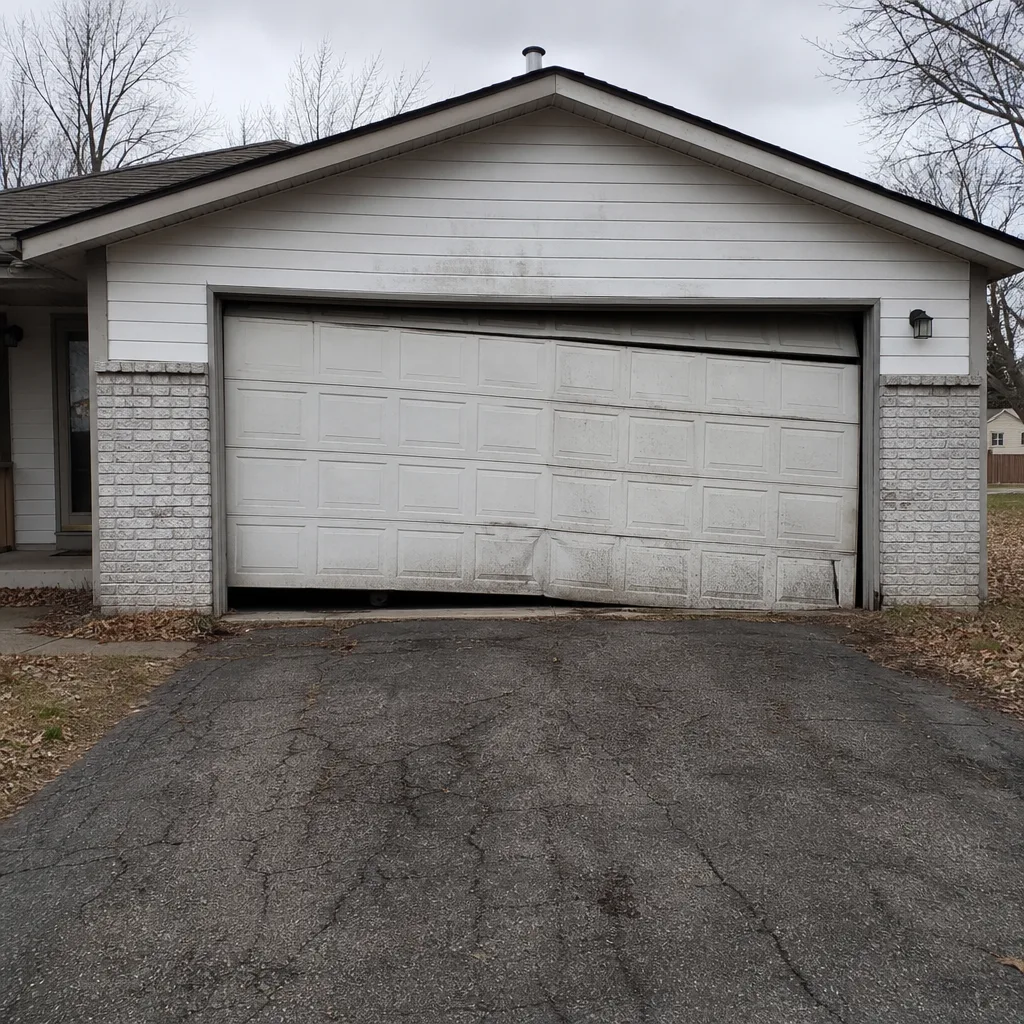 Before
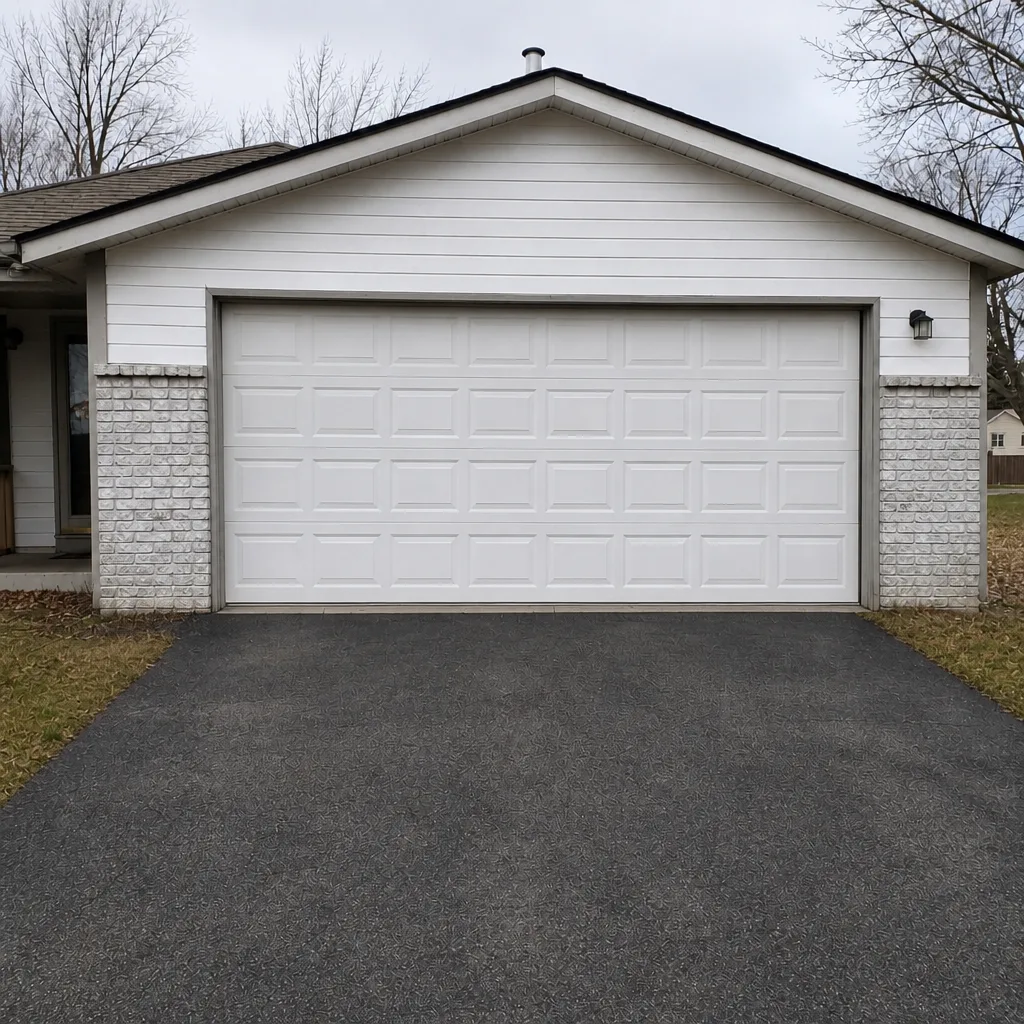 After
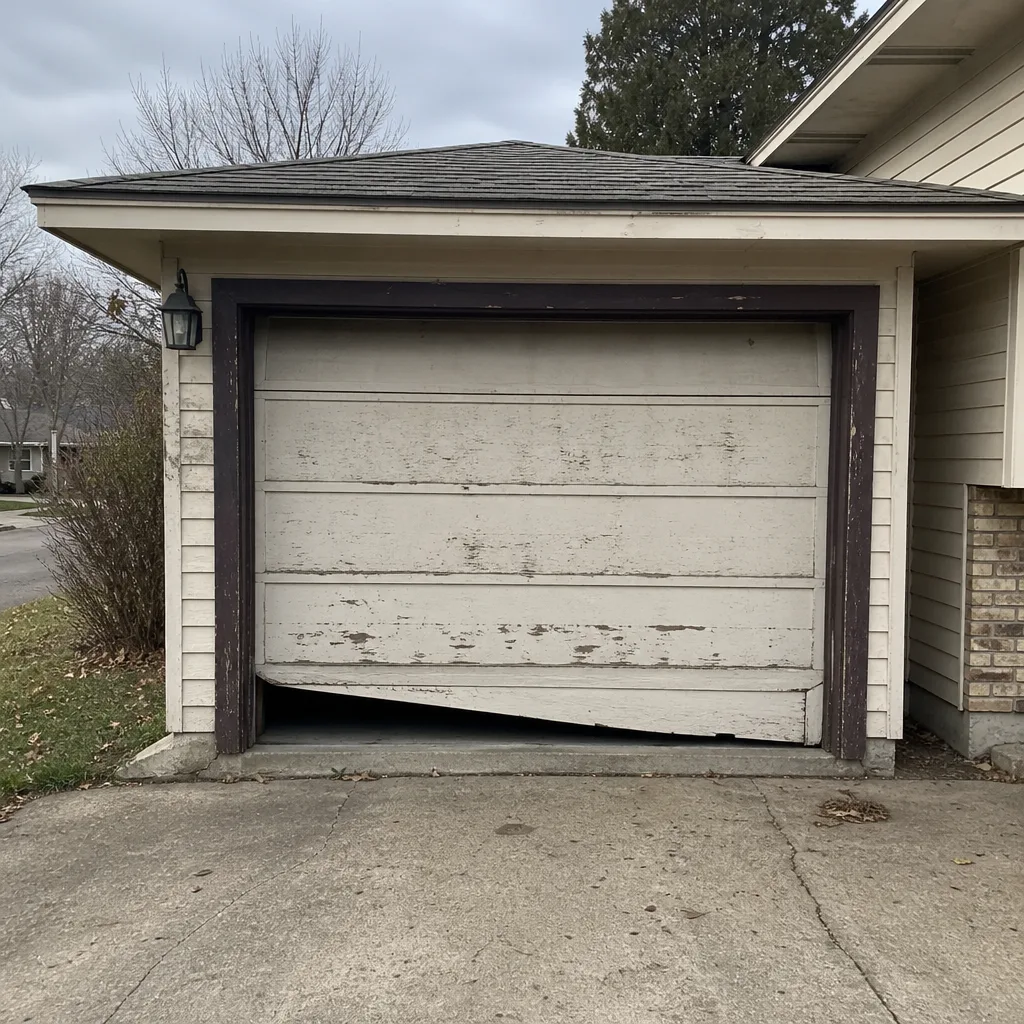 Before
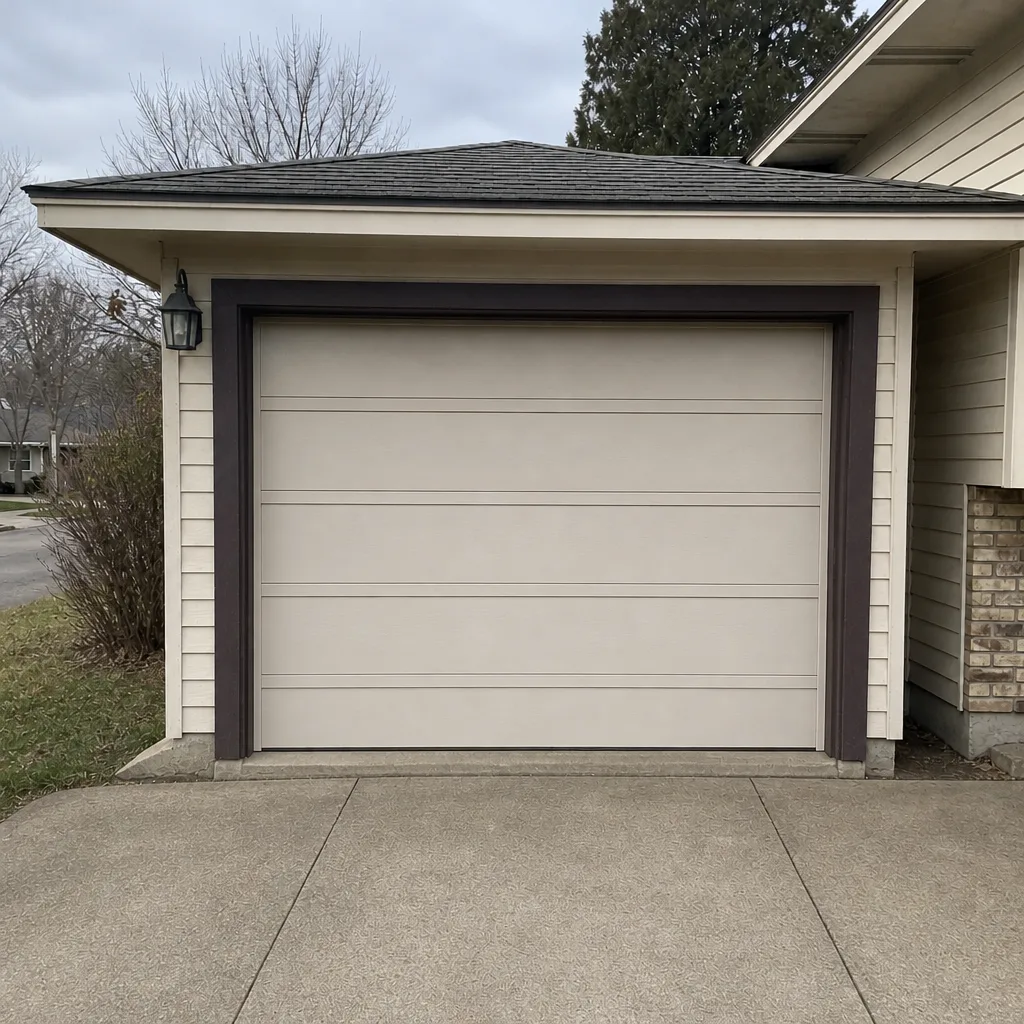 After
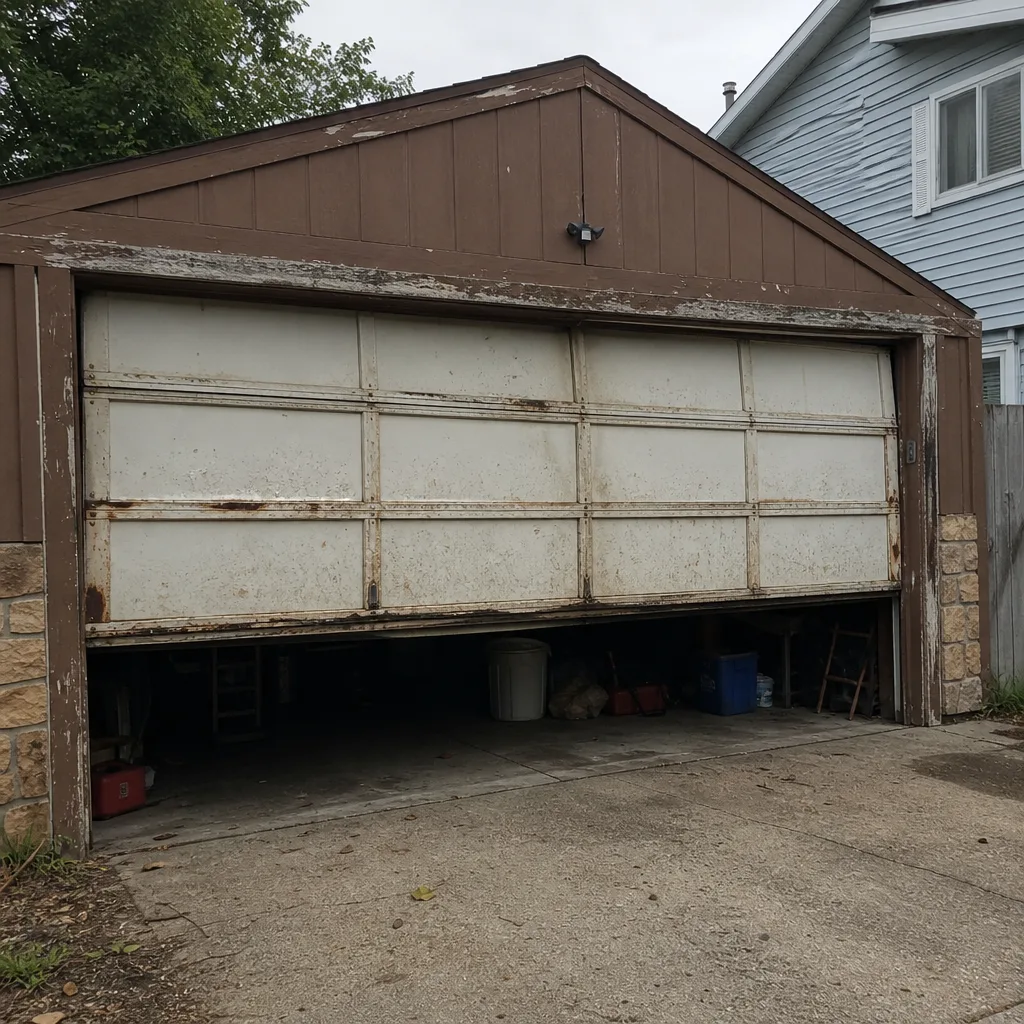 Before
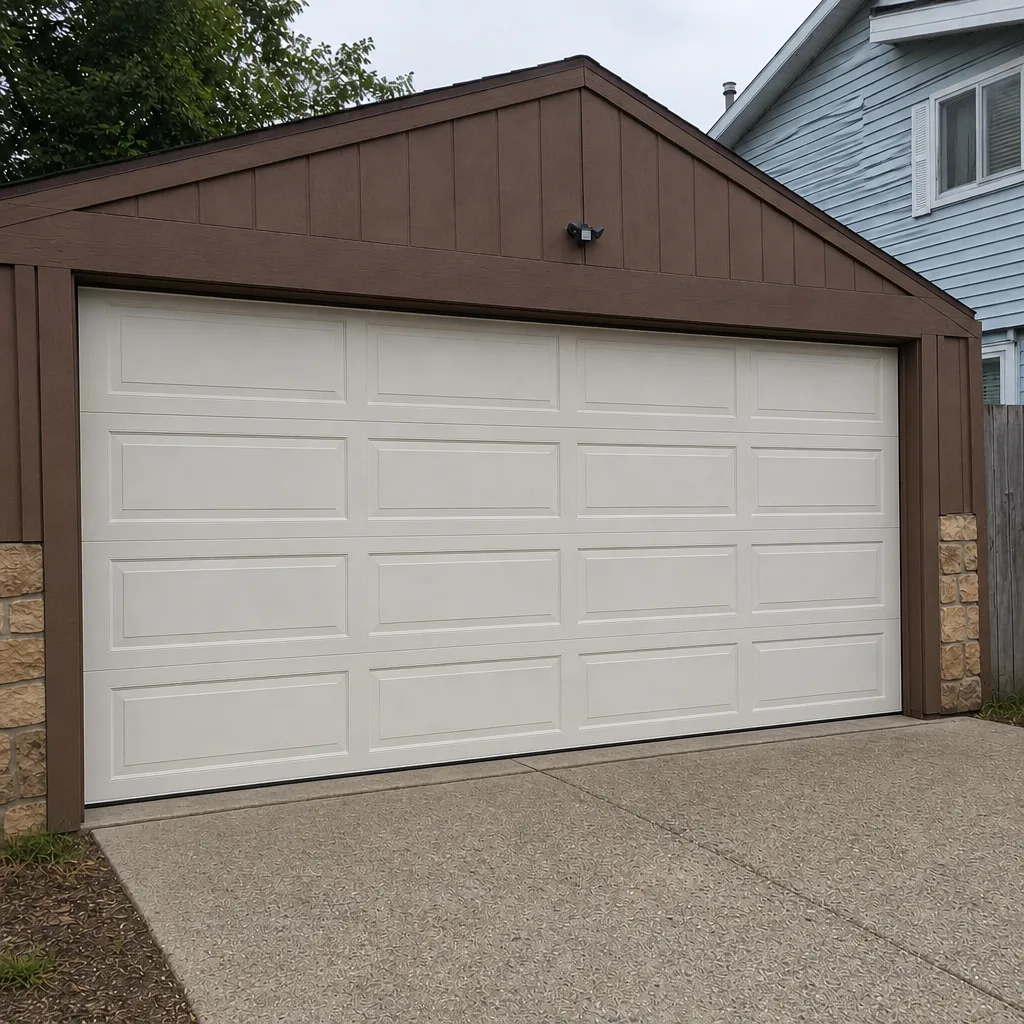 After
When to Call a Professional
Some jobs are a monthly check; others go straight to a call. Call a professional if you see a broken spring (a snapped spring, a door that won’t lift, or a loud pop), a fraying or snapped cable, a door that closes crooked or won’t close fully, a track that’s bent or off its mount, or a door that’s started slamming or reversing unexpectedly. A door jammed open with the household exposed is a security issue, and a door that won’t close in cold weather is a real inconvenience in Bloomington.
We answer 24/7, and fast dispatch runs from 7am to 7pm. Broken spring? That’s our most common call, and we’re often back up and running the same day. We work on LiftMaster, Chamberlain, Genie, Clopay, Amarr, Wayne Dalton, Craftsman, and Raynor systems, so no matter what brand is on your door or opener, you’re not chasing a different specialist. Bloomington Garage Door Repair Pros offers free estimates in Bloomington – call (855) 904-7314. The price is quoted and agreed before any work starts, so the written estimate is the price.
Frequently Asked Questions
Spring repair in Bloomington typically runs $180 to $340 for a single spring, and most doors need a matched pair replaced together, so a pair is roughly double that. The written estimate sets the final price, and it’s agreed before any work starts. Call (855) 904-7314 for an exact quote – estimates are free.
Yes, in most cases we can. Broken springs and jammed doors are our most common calls, and we’re often back up and running the same day. We answer 24/7, and fast dispatch runs from 7am to 7pm, Sunday through Friday. Call (855) 904-7314 to see what’s open.
Once a year is a sensible baseline in this climate. Minnesota’s freeze-thaw cycles put extra stress on springs, cables, and seals, so an annual tune-up and balance check catches wear before it becomes a failure. If your door gets heavy use, a second look mid-winter is worth it.
No. The price is quoted and agreed before any work starts, and the written estimate is the price. If we find something the quote didn’t cover, we’ll explain it and get your approval before doing anything. Call (855) 904-7314 for a free estimate.
The threshold is about half of replacement cost. If the repairs you need this year add up to more than roughly half of a full replacement, replacement usually wins. A replacement for a basic single-car door in Bloomington typically runs $1,300 to $2,500 installed, so a free measure and quote make the call clear.
We service and repair LiftMaster, Chamberlain, Genie, Clopay, Amarr, Wayne Dalton, Craftsman, and Raynor systems. That covers the most common doors and openers in Bloomington, smart openers and older models alike. Call (855) 904-7314 if you’re not sure what’s on your door.
No. High-tension springs and cables store enormous force and can cause serious injury when they snap. Spring replacement is the highest-risk repair in the trade, which is why even many general handymen won’t do it. This is a job for a trained technician.
The Bottom Line
Your garage door is a mechanical system that fights Bloomington’s seasons every day, and the parts that fail first – springs, cables, seals – are the ones under the most freeze-thaw stress. Learn to read the door’s sounds and movements, do the cheap monthly checks, and know the repair-versus-replace threshold. When the problem is a spring, a cable, a track, or an opener, get a trained technician on it and get the price in writing first. You don’t need to know every part on the door to keep it working – you just need to know when to call. We’re here for the whole thing, no matter what brand is on your door or opener: Bloomington Garage Door Repair Pros.
Ready to get your door sorted? Call (855) 904-7314 for a free estimate. We answer 24/7 with fast dispatch from 7am to 7pm, Sunday through Friday.
Written by the team at Bloomington Garage Door Repair Pros.